Artificial intelligence is reshaping the global data center, from GPU racks and liquid cooling to high-speed networking. This transformation has made the data center ai server manufacturer a critical partner for cloud providers, enterprises, and research institutions.
Industry forecasts show why this market deserves careful attention. Gartner estimated worldwide artificial intelligence spending would reach about $235 billion in 2024, with further growth expected through 2028. IDC has also reported strong expansion in AI infrastructure investment, driven by generative AI workloads and accelerated computing. TrendForce has projected continued growth in AI server shipments, although supply constraints and changing procurement plans may affect annual results.
These figures reveal momentum, but they do not tell the entire story. Server volume alone cannot measure reliability, service quality, or total operating cost. A powerful system may still underperform when cooling capacity, software support, or network bandwidth is limited.
This article examines ten leading manufacturers worldwide. The comparison considers GPU integration, server design, energy efficiency, deployment experience, product breadth, and global support. It also references public company disclosures and research from Gartner, IDC, TrendForce, and other recognized industry analysts.
The ranking is not absolute. Market leadership changes quickly. Some manufacturers excel in hyperscale deployments, while others serve universities, laboratories, or regional data centers. Readers should verify current specifications, availability, and warranty terms before making purchasing decisions. That practical step is easy to overlook. Yet it often determines whether an AI server delivers lasting business value.
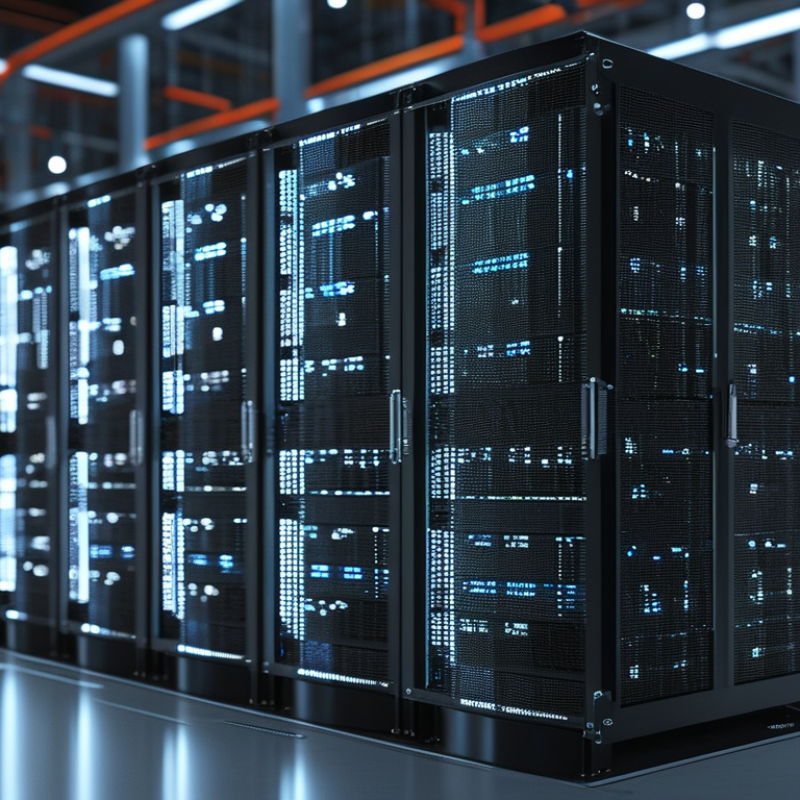
Data center AI server manufacturers are companies that design, assemble, validate, and support computing systems for intensive artificial intelligence workloads. Their products usually combine accelerators, central processors, high-speed memory, storage, networking, power delivery, and thermal management. The definition extends beyond selling individual chips. It includes complete servers, integrated racks, and customized platforms prepared for large-scale data centers.
This scope also covers manufacturers that operate through original design or contract production models. Some build standard systems, while others configure hardware for training, inference, simulation, or private enterprise deployment. Reliable evaluation should examine engineering capability, production capacity, regional service, energy efficiency, security controls, and long-term spare-parts support. Performance matters, but it is not the whole story. A fast server with weak cooling can become an expensive liability. Practical experience shows that deployment conditions often change results, especially in dense racks with uneven workloads.
A worldwide top-ten list should therefore use transparent criteria, such as verified shipments, revenue from AI server systems, customer deployments, and technical documentation. Public data can be incomplete. Rankings may shift quickly. That limitation deserves attention. Manufacturers should also demonstrate compliance with applicable trade, safety, privacy, and environmental requirements. The scope excludes ordinary office servers, standalone accelerator sales, and informal resellers without manufacturing responsibility. Even this boundary is imperfect, because many suppliers share design and production roles.
Top 10 Data Center AI Server Manufacturers Worldwide?
A credible ranking begins with transparent criteria, not marketing claims. Evaluate measured training speed, inference latency, memory capacity, and accelerator compatibility across comparable workloads. Independent testing matters. A server that performs well in a laboratory may struggle in a crowded data center. Review power usage, cooling requirements, rack density, and total ownership cost over three to five years. These details affect real budgets.
Reliability should carry serious weight. Examine failure rates, warranty response times, spare-parts availability, and maintenance coverage across regions. Strong manufacturers publish security practices, firmware policies, compliance records, and product lifecycle information. Customer evidence also helps, especially from hospitals, research centers, and financial institutions with demanding workloads. However, public case studies can be selective. Treat them as clues, not proof. A ranking must separate verified results from vendor-provided figures.
Tips: Use a weighted scorecard before collecting names. Give performance, reliability, energy efficiency, support, scalability, and price clear percentages. Require at least two independent sources for major claims. Test identical workloads, including data preparation and cooling overhead. Do not ignore deployment time. A cheaper system can become expensive when engineers spend weeks resolving compatibility issues. Rankings also need regular review, because accelerator generations, software stacks, and energy prices change quickly. Some criteria remain difficult to compare fairly, especially regional service quality. That limitation should be stated openly.
The evaluation framework emphasizes AI compute performance, scalability, energy efficiency, reliability, supply-chain capability, software compatibility, security, service support, innovation, and total cost of ownership. The percentages represent assessment weights rather than company-specific results. The criteria reflect commonly used data-center considerations reported by organizations such as MLCommons, the Uptime Institute, and the International Energy Agency.
The leading manufacturers serve different workloads, budgets, and deployment models. One specializes in eight-GPU servers for large language model training. Another builds dual-socket platforms for inference, analytics, and virtualization. A third focuses on custom designs, allowing cloud operators to adjust memory, networking, and storage. These vendors usually support high-speed interconnects, redundant power supplies, and remote management. Small details matter.
Several manufacturers compete through efficiency rather than raw performance. One develops liquid-cooled racks for dense accelerator clusters. Another produces compact systems for regional data centers and edge facilities. A storage-focused builder combines AI servers with fast NVMe arrays, helping teams move large datasets quickly. A networking-oriented manufacturer emphasizes low-latency fabrics between compute nodes. Their value appears during deployment, not only in benchmark charts.
The remaining profiles represent established enterprise suppliers, contract manufacturers, and specialist integrators. Enterprise suppliers often provide longer service agreements and predictable replacement cycles. Contract manufacturers can deliver large volumes, but customization may be limited. Specialist integrators combine accelerators, cooling, software, and installation services for research laboratories. Buyers should examine workload results, rack power, thermal design, firmware updates, and local support. Rankings change quickly. A technically impressive server may still disappoint when parts arrive late or engineers lack field experience. That weakness deserves honest attention.
Comparing the top ten data center AI server manufacturers requires more than counting accelerator chips. The strongest platforms combine high-density compute, fast memory, low-latency networking, and reliable orchestration software. Some systems use general-purpose processors with accelerator cards, while others rely on tightly integrated designs. Each approach affects training speed, inference cost, power usage, and maintenance.
In real deployments, cooling can decide performance. A rack running near full capacity may need liquid cooling, careful airflow planning, and stronger power distribution. Platform maturity also matters. Clear documentation, remote monitoring, spare-part access, and skilled support teams reduce operational risk. Global market reach should be judged by regional service centers, compliance experience, delivery capacity, and local integration partners. A technically impressive server may still disappoint when replacement parts arrive slowly. My comparison would also examine workload results, not only published specifications. Marketing figures can look precise, yet they rarely reflect mixed workloads or older software. That is an easy detail to overlook.
Tips: Test each platform with your own models, data pipelines, and power limits. Measure tokens per second, training time, energy use, noise, and recovery speed. Ask for three-year operating estimates, including cooling and support. Leave room for uncertainty; future software updates may change today’s ranking.
Global data center AI server manufacturing is shifting from standalone hardware to complete rack-scale systems. IDC’s Worldwide AI and Generative AI Spending Guide projects global AI infrastructure spending will exceed 500 billion U.S. dollars by 2028. This growth is changing how the top ten manufacturers compete. Accelerator availability still matters, but high-speed networking, memory capacity, and liquid-cooling readiness now influence purchasing decisions. Buyers want dense racks that can run large models without constant thermal throttling.
Energy pressure is becoming harder to ignore. The International Energy Agency estimates that data centers consumed about 415 terawatt-hours of electricity in 2024. It expects this figure to approach 945 terawatt-hours by 2030. Manufacturers are therefore redesigning power systems, airflow paths, and server layouts. Direct liquid cooling is moving from a specialist option toward a practical requirement for high-density deployments. It is not perfect. Maintenance skills remain uneven across regions.
Supply-chain resilience also shapes production. TrendForce reported that AI server shipments were expected to grow by roughly 28% in 2025, increasing demand for advanced substrates, high-bandwidth memory, and power components. Regional manufacturing capacity is expanding, yet shortages can still delay complete systems. The strongest suppliers will combine engineering experience with transparent performance data, lifecycle support, and repairable designs. Marketing claims alone are insufficient. Independent testing remains essential.
| Rank | Anonymous Manufacturer Profile | Primary Manufacturing Role | Typical AI Server Format | Accelerator Density | Thermal Design Direction | Key Manufacturing Strength | Market Trend Driving Demand |
|---|---|---|---|---|---|---|---|
| 1 | Global Rack-Scale AI System Integrator | Designs and assembles complete AI racks, networking, storage and management systems. | 4U to 8U servers and integrated rack-scale platforms. | 4–8 accelerators per node | Direct-to-chip liquid cooling increasingly used for high-density deployments. | End-to-end rack integration, validation and global deployment support. | Rapid expansion of generative-AI training and inference clusters. |
| 2 | Large-Scale Original Design Manufacturer | Produces standardized server platforms for cloud and enterprise infrastructure buyers. | 1U, 2U and 4U GPU or accelerator servers. | 2–8 accelerators per node | Air cooling for moderate densities; liquid-ready designs for newer platforms. | High-volume production, flexible configurations and cost efficiency. | Cloud providers are expanding customized AI infrastructure procurement. |
| 3 | Enterprise Server Manufacturer | Supplies validated AI servers with enterprise management, security and support services. | 2U to 8U rack servers and modular GPU systems. | 2–8 accelerators per node | Hybrid air and liquid cooling, depending on accelerator power. | Global service networks, lifecycle management and certified software stacks. | Enterprises are moving from AI experimentation to production workloads. |
| 4 | Specialized High-Performance Computing Builder | Builds optimized systems for scientific computing, simulation and large-scale AI. | High-density 4U to 8U systems and liquid-cooled clusters. | 4–8 accelerators per node | Warm-water or direct-liquid cooling for sustained intensive workloads. | Performance tuning, cluster interconnect design and workload optimization. | AI and traditional HPC workloads are converging in research environments. |
| 5 | Telecom and Edge AI Server Producer | Manufactures compact, ruggedized systems for telecommunications and distributed sites. | Short-depth 1U, 2U and edge appliance platforms. | 1–4 accelerators per node | Air cooling remains common because of space and maintenance constraints. | Compact design, remote management and operation in non-traditional data centers. | AI inference is moving closer to users, factories, vehicles and network sites. |
| 6 | Modular Data Center Infrastructure Manufacturer | Combines AI servers with prefabricated power, cooling and rack infrastructure. | Pre-engineered multi-rack modules and containerized data centers. | Rack-level deployment | Rear-door heat exchangers and liquid-cooling distribution units. | Faster deployment, repeatable construction and predictable capacity expansion. | AI demand is increasing the need for rapid data center capacity delivery. |
| 7 | Storage-Optimized AI Infrastructure Builder | Manufactures systems designed for high-throughput datasets, checkpoints and model pipelines. | 2U to 4U compute-storage nodes and disaggregated platforms. | 2–8 accelerators per node | Air or liquid cooling based on compute and storage density. | High-speed storage fabrics, parallel file systems and data pipeline integration. | Large AI models require faster access to training data and model checkpoints. |
| 8 | Sovereign and Regional AI Server Manufacturer | Builds systems tailored to local procurement, security and data-sovereignty requirements. | Enterprise rack servers and regional cluster configurations. | 2–8 accelerators per node | Air-cooled systems remain common; liquid cooling adoption is rising. | Local compliance, supply-chain control and regional technical support. | Governments and regulated industries are investing in domestic AI capacity. |
| 9 | Customized Hyperscale Infrastructure Partner | Develops highly customized server, rack and networking designs for very large operators. | Open-rack systems and purpose-built accelerator platforms. | Rack-scale accelerator systems | Liquid cooling and high-capacity power distribution are increasingly standard. | Custom engineering, supply-chain scale and rapid platform iteration. | Hyperscale operators are adopting purpose-built infrastructure to improve efficiency. |
| 10 | Sustainable and Energy-Efficient AI Server Producer | Focuses on energy efficiency, longer equipment life and lower environmental impact. | Energy-optimized 1U to 8U systems and refurbished-platform solutions. | 1–8 accelerators per node | Efficient air cooling, liquid cooling and heat-reuse-ready designs. | Power optimization, repairability, component reuse and lifecycle reporting. | Data center electricity consumption and sustainability requirements are rising globally. |
Note: Company names and brand-level figures are intentionally omitted. The rankings represent globally important manufacturer profiles and production models rather than a definitive company-by-company market-share ranking. Industry context is aligned with publicly reported trends from the International Energy Agency, ASHRAE thermal-management guidance, Open Compute Project design practices and data-center infrastructure research.
Measure training speed, inference latency, memory capacity, and accelerator compatibility. Use identical workloads. Marketing claims are not enough.
Laboratory results may change inside a crowded data center. Independent tests reveal performance, heat, delays, and unexpected compatibility problems.
Check power use, cooling needs, rack density, and thermal throttling. A dense rack may need direct liquid cooling. That adds maintenance demands.
Review failure rates, warranty response times, spare-parts access, and regional maintenance coverage. Ask for lifecycle and firmware policies.
Include purchase price, electricity, cooling, repairs, staffing, and deployment time over three to five years. A cheaper server may become expensive quickly.
Large models need accelerators, fast networking, substantial memory, and coordinated cooling. Buyers increasingly want complete systems instead of isolated servers.
Rising data center electricity use will pressure manufacturers to redesign airflow, power systems, and server layouts. Efficiency is becoming a budget issue.
Shortages of advanced substrates, high-bandwidth memory, and power components may delay complete systems. Regional production helps, but it does not remove every risk.
Treat hospitals, research centers, and financial institutions as useful evidence, not final proof. Public examples can be selective. That weakness deserves attention.
Review it regularly as accelerators, software stacks, service quality, and energy prices change. Some comparisons remain imperfect. State that openly.
This article explores the global data center AI server manufacturer landscape, defining the role of these companies in designing, integrating, and delivering high-performance computing systems for artificial intelligence workloads. It explains the criteria used to identify the top ten manufacturers, including processing capability, system scalability, energy efficiency, cooling solutions, supply chain strength, reliability, software compatibility, customer support, and international market reach.
The profiles compare leading AI server platforms through their computing architectures, accelerator support, networking technologies, storage options, security features, and deployment flexibility. The article also examines how manufacturers serve cloud providers, research institutions, enterprises, and specialized computing environments. Finally, it reviews major market trends shaping the industry, such as rapid AI adoption, demand for higher-density systems, energy-conscious data center design, liquid cooling, edge computing, regional supply chain development, and the growing need for adaptable infrastructure that can support evolving AI models and workloads.

Nexus AI Server