Explore our elite range of certified network components, processor nodes, storage arrays, and high-performance server upgrades.
Modern digital structures are expanding exponentially. Hyperscale data centers, distributed edge computing frameworks, and deep learning neural networks demand highly resilient server infrastructure. This acceleration has shifted enterprise procurement methodologies from simple stock acquisition to complex, custom-engineered topological designs. In this environment, acquiring premium components is critical. The efficiency of a data center relies heavily on minor components, such as high-integrity SAS RAID host bus adapters, enterprise-class solid-state arrays, memory modules, and physical support brackets.
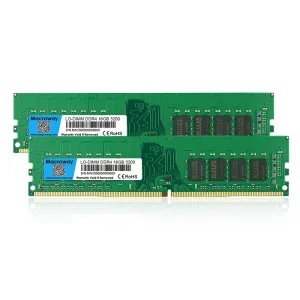
Organizations require customized server solutions to manage workloads effectively. For instance, virtualization and database clusters depend on high-density DDR4 or next-generation DDR5 ECC memory to prevent single-bit errors that lead to fatal system crashes. Storage systems rely on enterprise-class SSDs, such as the 1.92TB 2.5-inch arrays, optimized for continuous I/O performance in NAS frameworks. At the hardware level, structural elements like the 03T8898 hard disk brackets ensure secure drive installation, proper airflow, and vibration resistance, preventing premature drive failures in high-density rack configurations.
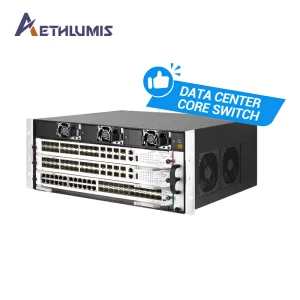
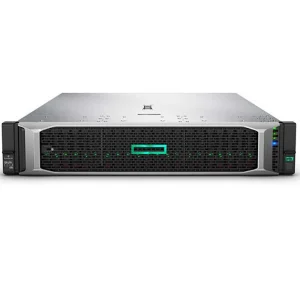
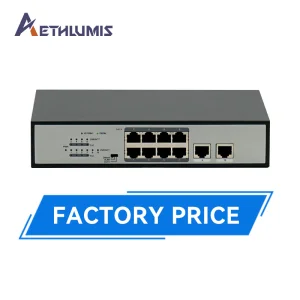
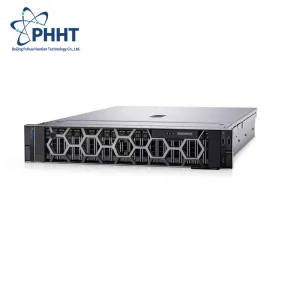
Industrial infrastructure requires a coordinated approach across compute, storage, and networking layers. Systems such as the HPE ProLiant DL380/DL360 Gen10/Gen11 or Dell PowerEdge R750/R760 serve as core enterprise nodes. However, their efficiency relies on peripheral connectivity. Layer 3 managed network switches, which route data traffic with capacities up to 1.47Tbps via OSPF, BGP, and MPLS protocols, prevent data bottlenecks between compute nodes and storage endpoints.
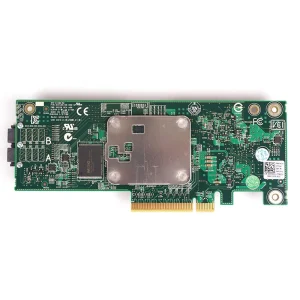
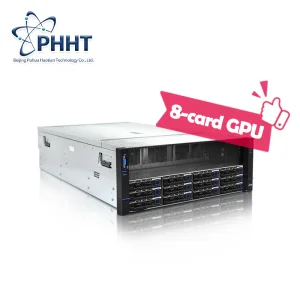
For AI-focused applications, multi-GPU computing nodes are essential. Our 4U GPU rack servers support up to 8 high-performance GPUs, offering the computational power required for large language models (LLMs) and real-time inference. In these setups, high-performance SAS cards with up to 8GB of cache act as high-speed buffers, protecting data integrity in RAID 5 configurations and bridging the performance gap between slow storage media and fast processors.
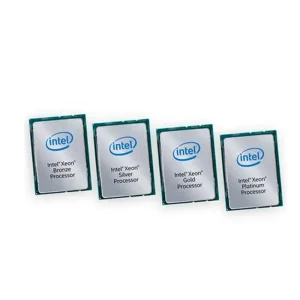
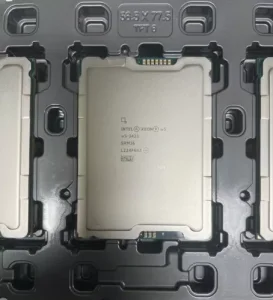
Combining systems like the Intel Xeon W5-3423 processor with high-capacity ECC memory arrays, L3 managed network switches, and RAID controllers provides a highly reliable hardware stack. This setup reduces system latency, minimizes unexpected downtime, and optimizes energy usage across enterprise infrastructures.
Over two decades of proven reliability, custom configurations, and strict quality control standards.
Founded on July 10, 2003, our organization has spent 21 years developing hardware solutions for the server industry. We manage a specialized testing and configuration facility designed to verify components before shipment. Our team of graduate R&D engineers supports both standard and custom requests, including sample processing, custom layout development, and Configure-to-Order (CTO) or Build-to-Order (BTO) setups.
Our quality control process is based on a 100% inspection methodology. Every component, from high-frequency SAS cards to network switches and ECC RAM modules, undergoes functional testing. Our engineers run thermal and load tests to confirm that each item meets industrial standards. Additionally, we verify the origin of all raw materials, ensuring traceability and reliability across the product lifecycle.
Enterprise data centers require long-term planning for server architectures. The shift toward Compute Express Link (CXL) is redefining memory access, enabling shared memory pools between CPUs and GPUs. This technology reduces latency and optimizes resource usage. In parallel, the transition from PCIe Gen 5 to Gen 6 doubles data throughput, allowing SAS controllers and NVMe storage devices to operate without traditional speed bottlenecks.
As AI applications become more common, components must be designed for higher thermal loads. High-density servers require accessories that manage energy efficiently. For example, our custom disk brackets are built with materials that help disperse heat and improve airflow. In networking, high-speed Layer 3 managed switches are being upgraded to support denser fiber connections and faster routing protocols, maintaining stable throughput in high-demand environments.
Our business serves key global regions: North America represents 15% of our distribution, Eastern Europe accounts for 20%, and domestic markets make up 50%. Navigating these different regions requires compliance with international standards, including CE, FCC, RoHS, and UL guidelines. We perform comprehensive inspections on all components to ensure they meet regional requirements for electrical safety, materials compliance, and electromagnetic interference.
To support our clients' supply chains, we maintain inventory levels of critical components, including high-capacity DDR4/DDR5 ECC memory modules, enterprise storage drives, and network switches. Having these parts in stock helps reduce lead times, helping system integrators and engineers maintain their project timelines even when wider supply chain disruptions occur.
Technical answers to common questions about server components, integration, and performance tuning.
SAS RAID cards with onboard cache (ranging from 1GB to 8GB) act as intermediate storage buffers between the host operating system and physical storage media. For database and virtualized environments characterized by high write/read cycles, this cache accelerates I/O processing by queuing operations, thereby improving throughput and system efficiency.
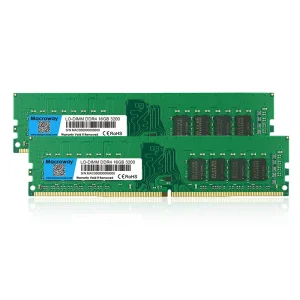
Error-Correcting Code (ECC) memory identifies and corrects single-bit memory errors in real time. Standard memory modules lack this capability, leaving systems vulnerable to memory errors that can trigger kernel panics or blue screen events. Using ECC memory helps prevent downtime and data corruption in business-critical environments.
Layer 3 switches perform routing functions locally, bypassing the need to send external traffic back to core routers. Supporting protocols like OSPF, BGP, and MPLS, they manage high data transfer volumes (up to 1.47Tbps) with minimal latency, improving efficiency across complex compute clusters.
We offer Configure-to-Order (CTO) and Build-to-Order (BTO) options. Our graduate R&D engineering team assists clients with custom layout designs, sample processing, and component verification to ensure systems are tailored to specific application requirements.
We test 100% of our products before dispatch, verifying signal integrity, thermal stability, and overall performance. Our components are traceable from raw materials through final assembly, ensuring reliable integration into enterprise architectures.
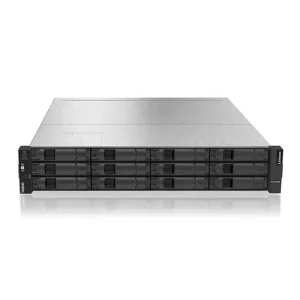
Discover our selection of network switches, high-density GPU compute servers, rack chassis platforms, and industrial switches.
 Nexus AI Server