Explore our leading enterprise solutions engineered for generative AI training, deep learning workstation deployment, and cloud rendering.
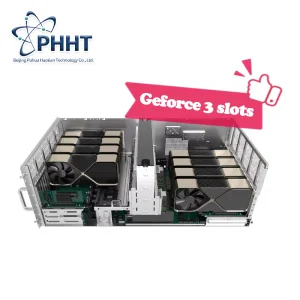
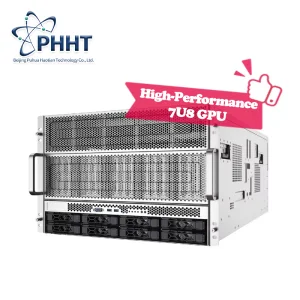
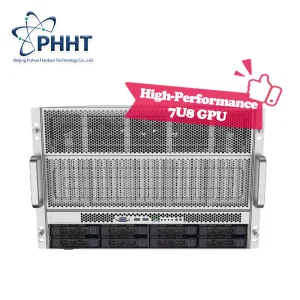
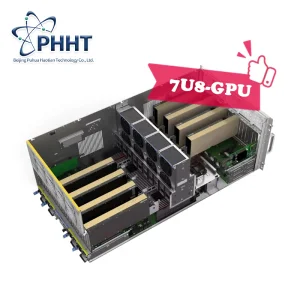
As the global computational landscape transitions from traditional serial processing to massive parallel compute nodes, the demand for high-density rack servers has witnessed unprecedented growth. Today's hyper-scale data centers, enterprise private clouds, and research organizations require backend infrastructure that offers unparalleled compute density, optimized thermals, and absolute reliable uptime. Rack server solutions have shifted from basic transactional platforms to the primary engine powering artificial intelligence, LLM (Large Language Model) training, fluid dynamics simulations, and high-fidelity cloud rendering.
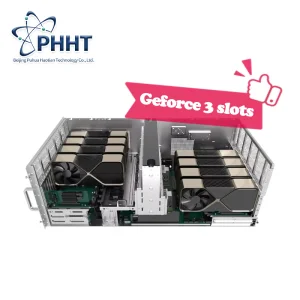
In this high-performance computing era, Aethlumis server architectures emerge as the standard for multi-GPU density and server reliability. Designed to support multi-faceted workloads with AMD EPYC processors and up to 8x hardware accelerator cards (such as the next-generation RTX 5090 and high-capacity tensor-core GPUs), these platforms maximize processing efficiency per unit of rack space. Enterprise buyers are no longer seeking commodity hardware; they require highly integrated, thermal-efficient chassis designs with deep redundancy across power systems (80 Plus Platinum/Titanium) and network pathways to eliminate any single point of failure.
Training multi-billion parameter foundation models demands low-latency communication between core pipelines. Multi-GPU clusters reduce iteration periods significantly.
Real-time path tracing and low-latency virtual workstation streaming rely heavily on massive GPU rendering nodes mounted in robust rack setups.
Hybrid processing clusters with localized NVMe storage configurations ensure data pipelines remain saturated without structural bottlenecks.
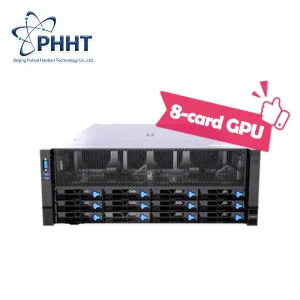
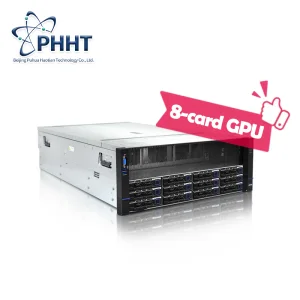
A key structural choice for systems architects when coordinating with a rack server supplier is determining the optimal form factor—specifically, choosing between 4U and 7U high-density systems. Aethlumis architectures cover both segments to cater to varying physical spatial requirements and thermal loads. The 4U chassis represents a hyper-compact form factor designed for enterprise edge nodes and standard datacenter environments. Operating 8x PCIe GPUs in a 4U space requires high-static-pressure counter-rotating fans, direct copper-plate heat pipes, and highly optimized layouts to ensure the system does not exceed crucial thermal boundaries.
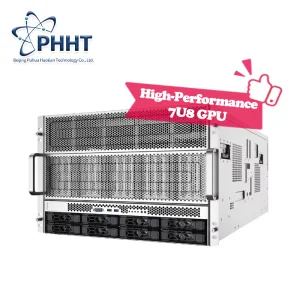
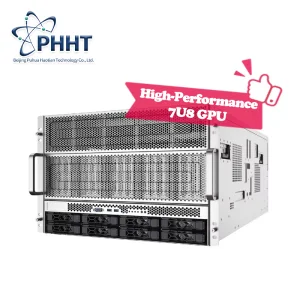
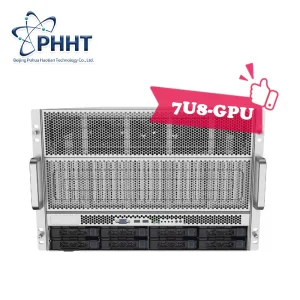
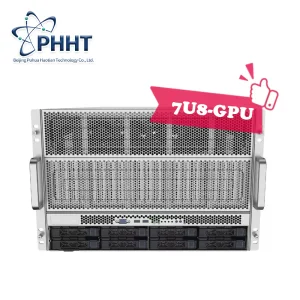
Conversely, the 7U configuration provides additional thermal headroom and physical space, catering to high-wattage computing platforms like the AMD EPYC combined with multiple next-generation high-TDP accelerators. The expanded volume of a 7U system allows for more extensive airflow chambers, large intake surfaces, and integrated space for localized NAS networks. This setup makes the 7U design the preferred foundation for long-running deep learning workloads and cloud rendering servers that run continuously under maximum power parameters.
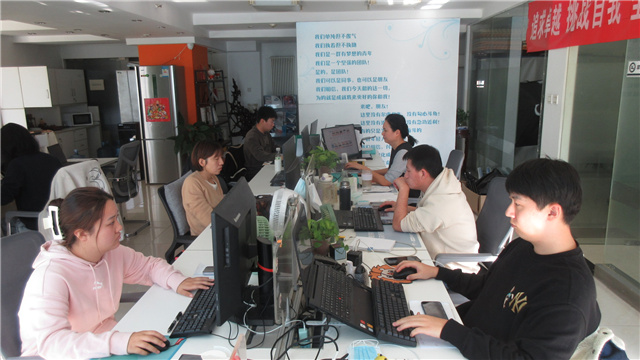
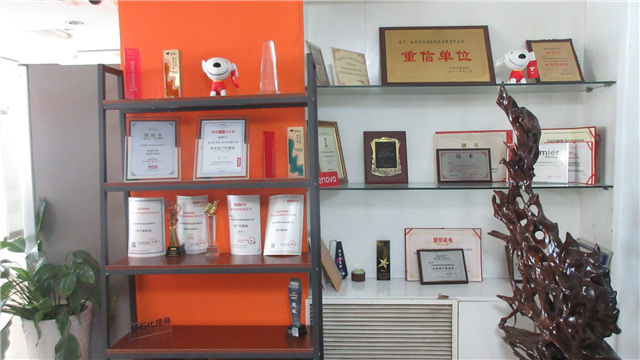
As a prominent player in the global network server landscape, our production operations represent a highly refined combination of raw industrial capability, quality assurance, and design agility. With over 21 years of industry experience (dating back to our corporate registration on July 10, 2003), we have developed deep relationships with core component vendors, silicon distributors, and testing facilities in the world's most advanced hardware cluster. This enables us to provide significant cost-efficiency and reliable sourcing capabilities to international enterprises.
While some suppliers act purely as middlemen, we manage an end-to-end integration and inspection model. This setup ensures that every custom machine shipped—whether for domestic enterprise use or key global markets like Eastern Europe and North America—undergoes rigid quality management protocols. Our quality assurance framework relies on robust tracking and material tracing, ensuring every capacitor, rail assembly, power distribution board, and chassis panel meets industrial compliance standards before integration.
We maintain an absolute commitment to quality control. Key highlights of our quality assurance pipeline include:
This systematic design process ensures that when you choose us as your rack server supplier, the resulting hardware functions seamlessly under 24/7 industrial workloads.
When packing 8 double-width GPUs and high-core-count processors (like the AMD EPYC series) into a single chassis, thermal design is paramount. High temperatures lead to thermal throttling, which degrades computing performance and reduces the lifespan of hardware components. Our engineering team utilizes advanced airflow simulations to optimize the placement of components inside the server chassis. By positioning high-efficiency fans at critical intake zones, we create a laminar airflow path that pulls heat away from the processor cores and GPU arrays, venting it efficiently out of the chassis. Additionally, we support customizable fan speeds and options for liquid-to-air cooling manifolds, providing buyers with the flexibility to adapt their hardware to their specific datacenter environments.
Review our verified operational metrics, manufacturing capacity, and global trade configurations.
High-density rack servers are optimized for specialized workloads across various vertical markets. As a technical partner, Aethlumis provides tailored setups designed for high-performance processing environments:
Training large neural networks requires high bandwidth and low latency across the computational fabric. Deploying our 7U 8-GPU rack servers provides the necessary PCIe lane allocation and thermal headroom to keep high-end accelerators operating at maximum performance. Localized deep learning tasks can run continuously without performance degradation, offering researchers predictable training timelines.
Modern architectural models, video game engines, and visual effect systems demand massive rendering performance. By combining high-frequency AMD EPYC processors with 8x GPUs, our servers handle complex lighting, physics simulations, and rendering pipelines efficiently. Datacenters can partition these GPU resources to host multiple virtual workstations, providing designers with remote access to high-performance workspace environments.
For research labs and engineering offices that require on-premise compute power, our 4U and 7U configurations support integrated network-attached storage (NAS). This setup combines high-speed processing and local storage in a single chassis, reducing network latency and simplifying data management. This unified architecture is well-suited for processing-intensive tasks such as seismic data analysis, genetic mapping, and financial simulations.
Procuring server infrastructure at scale is a significant capital investment. Enterprise buyers should evaluate potential partners using key engineering and operational metrics:
When selecting a manufacturing partner, focus on long-term support and system stability under continuous loads. Ask your prospective supplier detailed questions about PCIe lane distribution (specifically, whether they use PLX switches to expand connectivity or route direct lanes to the CPU), thermal head-room parameters under maximum load, and theMTBF (Mean Time Between Failures) ratings of the internal power distribution networks. Working with an experienced manufacturer helps prevent unexpected integration issues and ensures your infrastructure delivers stable, long-term performance.
Clear, detailed explanations addressing key system integration, electrical, thermal, and distribution queries.
Highly scalable rack-optimized systems built for intense training, virtualization, and storage cluster environments.
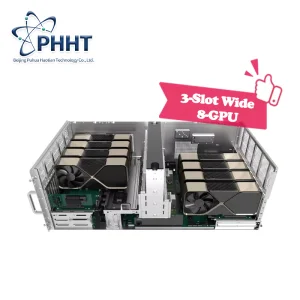
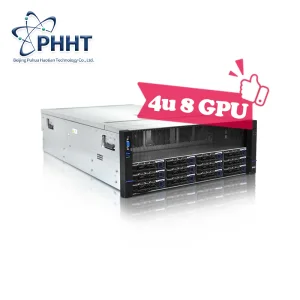
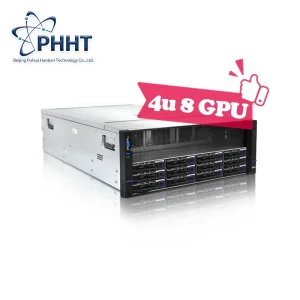
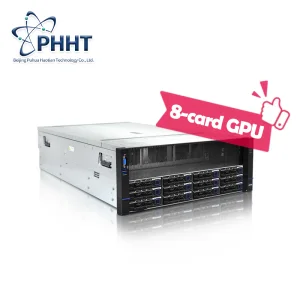
 Nexus AI Server