Nexus AI Server
Executive Summary: The Era of AI and Deep-Learning-Optimized GPU Infrastructure
In the rapidly evolving landscape of global computational architecture, the transition from central processing unit (CPU) supremacy to graphical processing unit (GPU) accelerated computing represents one of the most critical industrial shifts of the 21st century. Enterprises, hyper-scale datacenters, research institutes, and cloud service providers are facing unprecedented computational pressure driven by the exponential growth of Large Language Models (LLMs), deep neural networks, molecular modeling, and real-time visualization applications.
As a specialized OEM GPU Server Factory and Supplier with over 21 years of design, assembly, and testing experience, we bridge the gap between high-level algorithms and hardware execution. Choosing the correct server infrastructure is not merely about sourcing components; it is an optimization challenge that requires a deep understanding of thermal dynamics, PCIe lane allocation, power conversion efficiencies, and system interconnectivity. This comprehensive technical whitepaper details the architectural methodologies, quality control steps, and market solutions that position our hardware at the forefront of the global high-performance computing (HPC) sector.
1. Technical Architecture: Inside the Next-Gen GPU Chassis
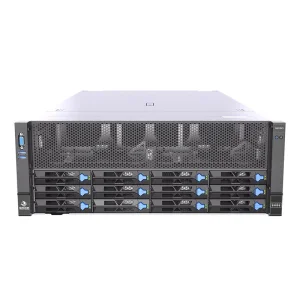
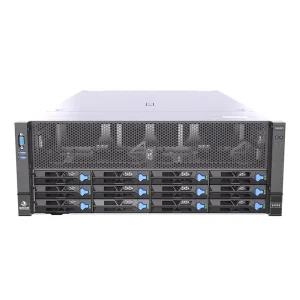
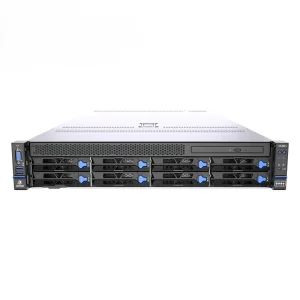
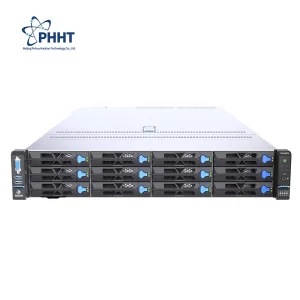
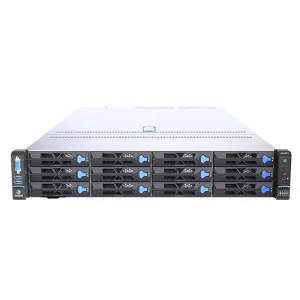
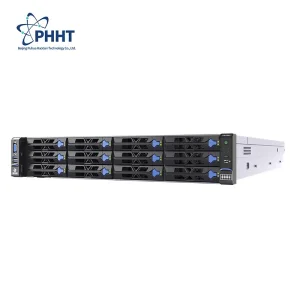
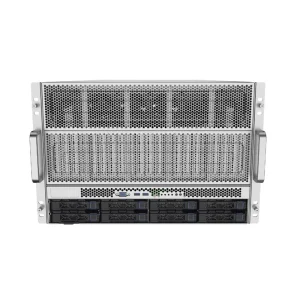
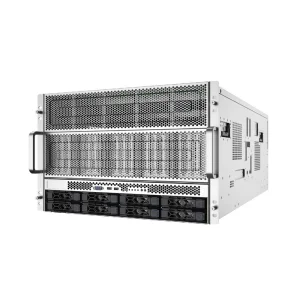
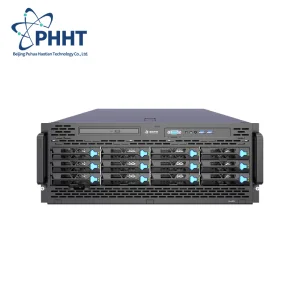
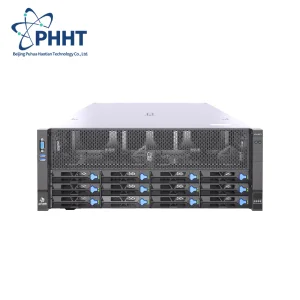
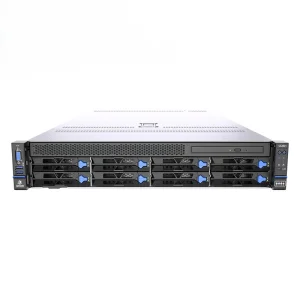
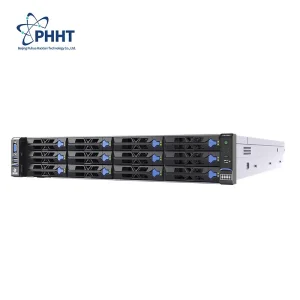
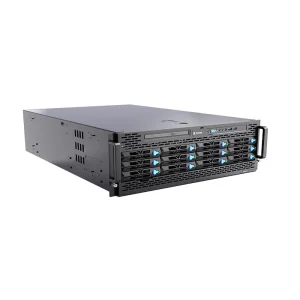
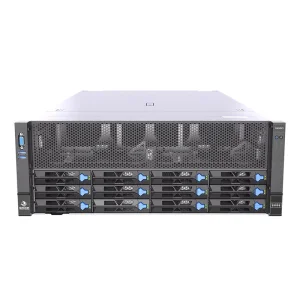
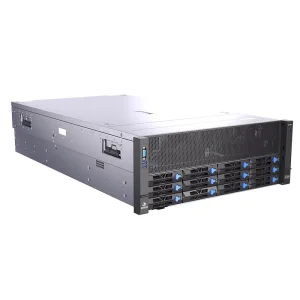
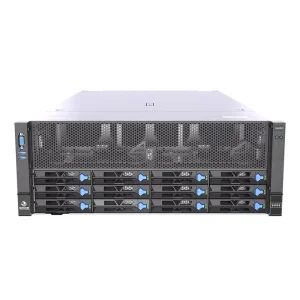
High-density computation requires robust physical containment and power infrastructure. Our product design features standard 2U and 4U rackmount configurations designed to optimize spatial density and thermal efficiency.
PCIe Gen 5.0 and Next-Generation Interconnect Topologies
Modern AI workloads demand extremely high bandwidth between the host CPU and the accelerating GPUs. Our system motherboards utilize dedicated PCIe Gen 5.0 architectures, doubling the throughput of previous Gen 4 systems to reach up to 64 GB/s per x16 slot. This architecture dramatically minimizes data latency during model training phases where weight updates are continuously transferred between host system memory and GPU VRAM.
Furthermore, our motherboard design avoids common bottleneck configurations by deploying PLX switches and physical trace optimization to maintain native signal integrity. This enables direct peer-to-peer (P2P) communication pathways between multiple GPUs, facilitating technology integrations like NVIDIA NVLink and AMD Infinity Fabric, ensuring that multi-GPU clusters operate as unified computing matrices.
Intel Xeon vs. AMD EPYC Processor Integration
To cater to diverse server deployments, we construct systems around both Intel Xeon Scalable and AMD EPYC processor families:
- Intel Xeon Architecture: Standardized with Intel Deep Learning Boost (DL Boost) and Advanced Vector Extensions 5412 (AVX-512) instruction sets. Best suited for virtualization, low-latency database queries, and traditional enterprise database integrations combined with inference tasks.
- AMD EPYC Platform: Featuring up to 128 cores per socket and up to 128 lanes of PCIe Gen 5 connectivity directly off a single CPU. Exceptional for high-throughput memory channels (supporting DDR5 up to 4800MHz) and massive virtualization instances requiring extensive physical cores.
2. Thermal Dynamics: Engineering Heat Mitigation in High-TDP Systems
Thermal throttling is the primary driver of performance degradation in AI clusters. Standard high-end enterprise GPUs operate with Thermal Design Power (TDP) constraints ranging from 300W to over 700W per accelerator. A fully loaded 4U server containing up to eight high-performance GPUs can generate upwards of 6000W of heat that must be continuously and actively extracted.
Dynamic Counter-Rotating Fans
Deploying heavy duty, high-static pressure counter-rotating cooling fans. These units are controlled via PWM (Pulse Width Modulation) via the BMC, adapting rotational speed based on real-time temperature telemetry from internal thermistors.
Advanced Airflow Ducting
Custom-engineered structural airflow shrouds direct localized high-velocity air streams over CPU heatsinks, RAM banks, and PCIe expansion slots, preventing thermal pocket formation in tight 2U/4U footprints.
Intelligent Power Redundancy
Featuring 80-Plus Titanium certified common redundant power supplies (CRPS), providing up to 96% energy conversion efficiency and supporting warm/cold stand-by modes to preserve utility infrastructure stability.
3. Macro-Level Industrial Solutions: Transforming Computational Power into Insights
The adoption of OEM GPU computing is not localized to singular industries. Our global supply systems provide hardware to major international sectors requiring high parallelism:
Generative AI & LLM Training (Large Language Models)
Training modern deep learning frameworks requires massive distributed clusters. The server systems must scale effectively across high-speed interconnect networks. Leveraging high-throughput 100G/200G InfiniBand networking and direct memory access (RDMA) capabilities, our custom server designs enable distributed multi-node parallel model training, reducing model iteration times from months to days.
Scientific Simulation & Advanced Molecular Dynamics
From protein folding simulations in biotechnology to structural geology modeling in fossil fuels, researchers rely on floating-point precision computing. Our GPU configurations support FP32, FP64, and specialized tensor cores that accelerate mathematical computations in astrophysics, weather modeling, and molecular dynamics.
Enterprise Database Virtualization & Analytics
Traditional storage arrays struggle with real-time transactional analysis. Combining Intel Xeon processor flexibility with multi-GPU architectures enables large databases to reside entirely in NVMe-backed virtual storage, with the GPU processing massive analytical queries instantly.
4. Quality Control, Traceability, & Enterprise Reliability
Under Google's E-E-A-T criteria, reliability is the absolute foundation of authority. A server failure in a cloud hosting center can result in significant financial losses. Over our 21-year manufacturing legacy, we have formulated strict quality management processes:
- Raw Material Traceability: Every component—from multi-layer PCB substrate components, VRM capacitors, up to the chassis structure—is cataloged with unique serial tracking. This ensures rapid batch identification and proactive preventive maintenance.
- 100% Comprehensive Inspections: No system leaves the factory floor without undergoing complete physical, operational, and stress inspections. This includes high-temperature chamber burn-in testing, full-capacity GPU compute strain validation, memory diagnostics, and network packet loss tests.
- Qualified Engineering Leadership: Our engineering unit is led by three highly educated research and development engineers possessing graduate-level qualifications in electronic engineering, thermal fluid systems, and computer hardware design.