An in-depth study of China's automated assembly plants, advanced system engineering, and industrial supply chains driving global enterprise computing.
In the global domain of hyperscale computing, the efficiency and architectural integrity of rack servers start within Chinese manufacturing corridors. Inspur, as a globally prominent developer of cloud and intelligence infrastructure, relies on highly integrated, robotic assembly complexes within China. These factories represent a convergence of advanced robotics, intelligent testing systems, and structural optimization pipelines. Operating with rigorous quality frameworks, these industrial hubs transition raw component inputs into functional, high-density computing platforms.
The factory architecture ensures rapid assembly scalability. Through automated optical inspection (AOI), x-ray structural analysis, and full-load stress testing (also known as environmental chambers or burn-in testing), each node—from the 1U rack servers up to multi-node 6U system chassis—is characterized by long-term durability. By centering manufacturing close to critical component suppliers (memory modules, custom heat pipes, and backplane PCBs), Inspur minimizes global lead times while guaranteeing custom architectural modifications are swiftly implemented.
To understand the application landscape of server hardware, it is critical to evaluate the design profiles of 1U, 2U, 4U, and 6U systems. These designations are not merely dimensional, they dictate thermal capacities, expansion limits, and electrical loads.
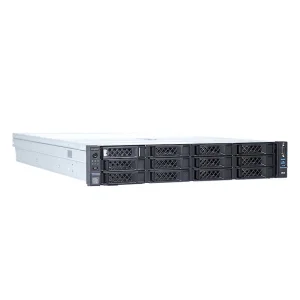
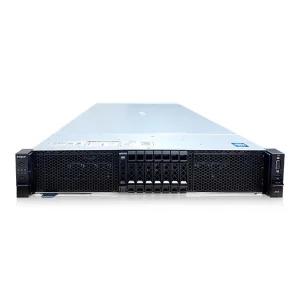
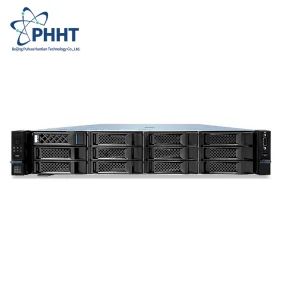
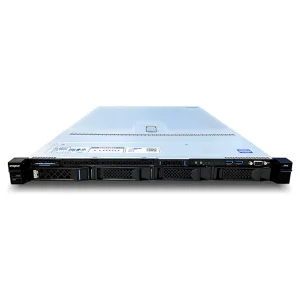
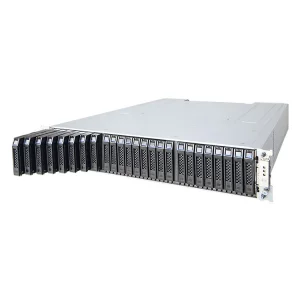
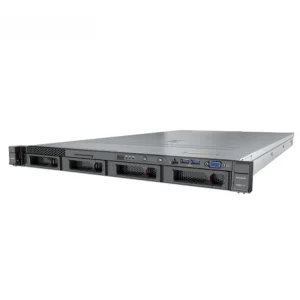
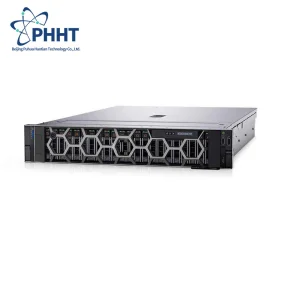
1U (such as the Inspur NF5180M6) and 2U (such as the NF5270M6 and NF8260M6) layouts are the backbones of standard web application deployments, virtualized clusters, and edge networks. They prioritize core count and memory density in space-constrained racks, utilising specialized centrifugal fans and dense cooling channels to manage thermal loads.
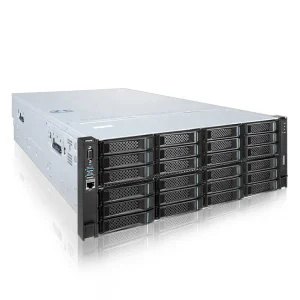
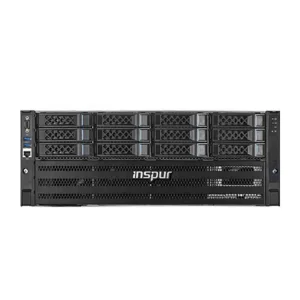
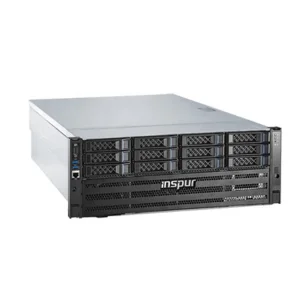
The 4U form factor, highlighted by the Inspur NF8480M5, utilizes quad-socket processing capability. By hosting up to four Intel Xeon Scalable Processors, this architecture is ideal for large-scale enterprise resource planning (ERP) databases, heavy virtualization layers, and in-memory databases requiring vast, contiguous memory pools.
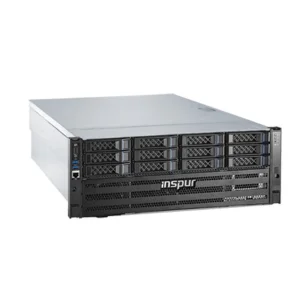
6U system configurations, specifically the NF5688M6, are built around artificial intelligence applications. These host advanced PCIe topologies, massive NVLink structures, and dedicated high-power distribution lines required by multiple accelerators, providing the processing power necessary for LLM training and neural network inference.
Traditional PCIe Gen 4/Gen 5 server channels are bound by directional bandwidth limits. NVLink technologies integrated within Inspur's 6U architecture facilitate direct point-to-point GPU communications. This layout reduces processing overhead and latency, maintaining high GPU utilization and preventing performance bottlenecks during distributed AI training workloads.
Global demand for hardware infrastructure is shifting from off-the-shelf single server nodes to customized, application-aligned computing platforms. Multi-national corporations, cloud service providers, and large infrastructure engineers demand high flexibility in hardware architectures. Our 21 years of experience in the server sector shows that procurement patterns require compliance across three major facets:
First, supply-chain traceability. Modern procurement frameworks demand complete validation of raw material sourcing. Regulatory structures globally request transparency regarding where memory silicon, copper conductors, and power regulators originate. This high traceability helps avoid disruptions and guarantees operational continuity.
Second, energy efficiency and sustainability. With data center power consumptions rising due to AI workloads, there is a clear trend towards liquid cooling, high-efficiency power supplies (Platinum/Titanium 80 Plus), and automated thermal power capping.
Enterprise compute workloads are highly diverse. Deploying a single hardware configuration for all applications leads to performance bottlenecks and inefficient resource utilization. Inspur servers are engineered to fit distinct macro-industry architectures:
Deployments leveraging platforms like the NF5688M6 6U Rack or the NF5468M6 2U Server focus on computational acceleration. By optimizing GPU-to-CPU and GPU-to-GPU pathways, these configurations are tailored for training deep learning models, rendering complex simulations, and processing big data analytics in real-time.
Using dual-socket processors and large RAM capacities (e.g., NF8260M6 or NF8480M5), cloud environments run hundreds of virtual machines simultaneously. These servers offer high redundancy features including hot-swappable dual power supplies, multi-port high-speed network interfaces, and flexible drive configurations to guarantee minimal downtime.
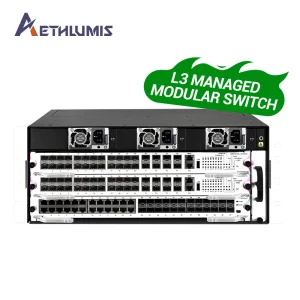
For data protection, archiving, and large-scale backup operations, hardware configurations like the AS2150G2 Network Switch Storage Disk Array and Hybrid Flash NAS controllers are essential. These setups connect server infrastructure with expansive arrays of SATA and NVMe SSDs, maintaining low latency data access across network fabrics.
Database workloads demand high thread count capabilities, high-speed memory channels, and enterprise-grade hardware reliability. Dual-socket or quad-socket processors deliver the performance needed for high transaction rates (OLTP), reducing transactional bottlenecks and enabling fast analytics queries.
A key advantage of Chinese manufacturing centers is the ability to adapt to custom hardware specifications. Global enterprises often require modifications, ranging from customized physical rack bracket structures to tailored UEFI firmware settings for security and performance optimization.
Our facilities support customized integration options including custom branding, sample testing, and bespoke hardware testing. Backed by graduate-level R&D engineers, Inspur's manufacturing plants can swiftly adjust structural layouts, optimize cooling fan layouts, and integrate specific RAID cards, ensuring the hardware matches the customer's deployment parameters perfectly.
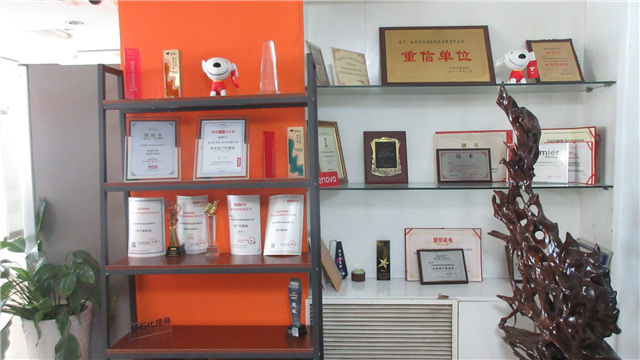
Below is a detailed overview of our corporate and production parameters. Established in 2003, our organization has 21 years of experience in custom hardware assembly, testing, and global logistics.
Answers to critical questions regarding system compatibility, manufacturing capabilities, and global procurement procedures.
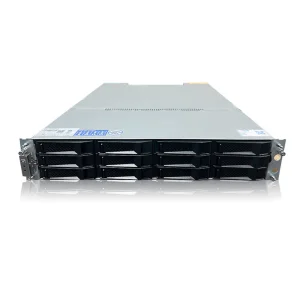
 Nexus AI Server