Choosing a cloud AI server manufacturer is not merely a purchasing decision. It shapes how quickly models train, how reliably applications respond, and how safely data moves through each workload.
Jensen Huang, founder and CEO of NVIDIA, has stated, “The future of computing is accelerated computing.” His observation reflects today’s infrastructure reality. AI systems need more than powerful GPUs. They require balanced servers, fast networking, efficient storage, stable firmware, and carefully designed cooling. A capable cloud AI server manufacturer connects these elements into one dependable platform.
Look closely at the hardware room. A dense rack may contain multiple accelerators, high-speed switches, redundant power supplies, and liquid-cooling equipment. Small design choices can affect energy costs and uptime. Ask how the manufacturer validates thermal performance under sustained training loads. Request evidence about benchmark methods, component traceability, firmware updates, and technical support response times. Marketing numbers alone are not enough.
Experience also matters after deployment. The strongest manufacturers help teams scale from a pilot cluster to production workloads without replacing every component. They explain trade-offs clearly, including availability, latency, maintenance windows, and total ownership costs. No supplier is perfect. That limitation deserves honest discussion.
A reliable evaluation should compare service-level commitments, security controls, warranty coverage, and supply continuity. It should also test real workloads, not only synthetic benchmarks. The right partner may cost more initially, yet prevent costly delays later. Still, assumptions can fail. Capacity forecasts change, power prices rise, and new accelerators arrive quickly. Careful buyers leave room for revision.
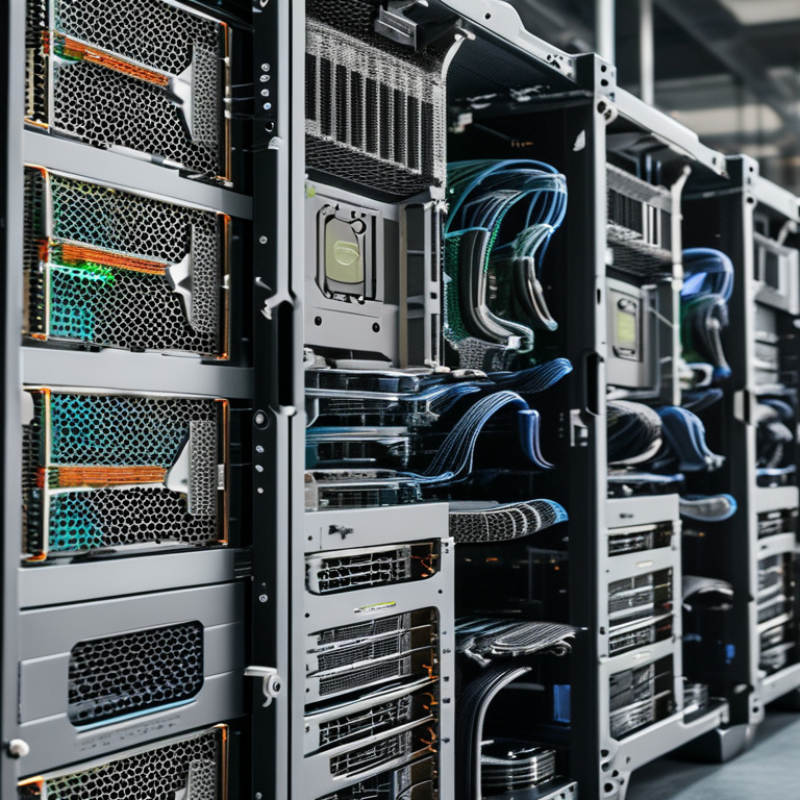
A cloud AI server manufacturer designs and builds the physical systems that power artificial intelligence in remote data centers. These systems may include high-performance processors, accelerators, memory, storage, networking equipment, and cooling components. Users access the computing capacity through the internet instead of installing large machines in their own offices.
The manufacturer’s role extends beyond assembling hardware. Experienced teams test thermal performance, power usage, firmware stability, and workload behavior before deployment. A reliable supplier should explain how servers are configured, maintained, and replaced. Clear documentation matters. So does practical support when a training job fails at midnight.
Security requires equal attention. Manufacturers should describe access controls, component traceability, data-center requirements, and relevant compliance practices. They should also clarify where customer data is processed and how long system logs remain available. These details help buyers compare real capabilities instead of attractive performance numbers.
Choosing a cloud AI server manufacturer can improve scalability and reduce the burden of managing physical infrastructure. However, higher computing capacity does not automatically create better results. Poor software integration, weak cooling design, or unclear service terms can become expensive problems. Some manufacturers also use broad claims that deserve careful questioning. Requesting test results, service-level terms, and references from comparable workloads is sensible. The right partner should welcome those questions, even when the answers reveal limitations.
I server manufacturer provide?
Engineers study model size, training time, data movement, and expected demand. They then select suitable processors, accelerators, memory, and storage. A good design avoids costly components sitting idle. Specifications alone are not enough.
Dense server racks can produce intense heat within minutes. Technicians plan rack positions, airflow paths, power delivery, and cooling capacity. Liquid cooling may improve thermal control. It also creates extra maintenance work.
Testing should cover temperature, power usage, firmware stability, network latency, and workload behavior. Teams should test systems before deployment. Small warnings matter. Request practical test results, not only attractive performance figures.
Reliable systems monitor component health and test failover procedures before real incidents occur. The supplier should explain maintenance, repairs, replacements, and service commitments. Clear documentation helps. Midnight failures still happen.
Buyers should ask about access controls, network separation, encryption, and component traceability. They should also confirm where data is processed and how long logs remain available. Relevant audits and technical standards may provide additional confidence. They are not perfect guarantees.
No. Strong hardware cannot repair poor software integration or unclear service terms. Weak cooling and network bottlenecks may also increase costs. The fastest system may still perform poorly. That possibility deserves attention.
Ask for workload-specific references, service terms, maintenance procedures, and detailed configuration documents. Compare results from similar training or inference tasks. Question broad claims politely. A trustworthy supplier should admit limitations.
A cloud ai server manufacturer is a specialized provider that designs, builds, and supports scalable computing infrastructure for artificial intelligence workloads. Instead of offering only standard servers, it combines high-performance processors, accelerators, memory, storage, networking, and cloud management tools to create systems capable of handling model training, data analysis, and real-time AI applications. Its infrastructure is designed for flexibility, energy efficiency, reliability, and secure resource allocation.
These manufacturers may provide customized server configurations, cloud deployment, monitoring, maintenance, technical consulting, and infrastructure upgrades. When evaluating a cloud ai server manufacturer, businesses should consider hardware performance, scalability, security practices, service responsiveness, compatibility, total cost, and long-term support. Companies often choose specialized providers because they can deliver more focused expertise, faster customization, and infrastructure that aligns closely with specific AI objectives, helping organizations improve performance while managing operational complexity and future growth.

 Nexus AI Server