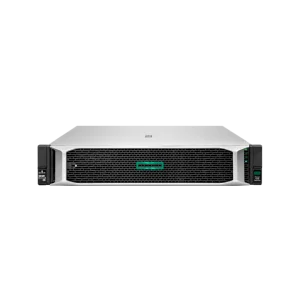
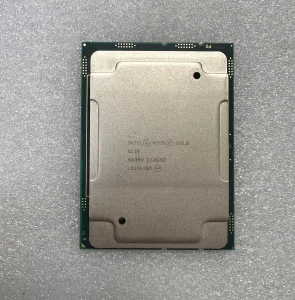
Explore our certified enterprise server systems, smart switches, and bionic compute units designed for secure and mission-critical deployment in modern medical and industrial environments.
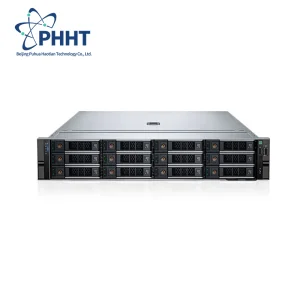
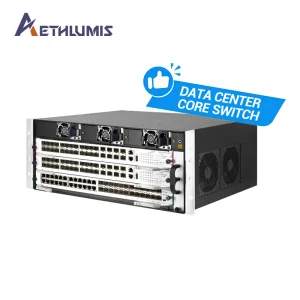
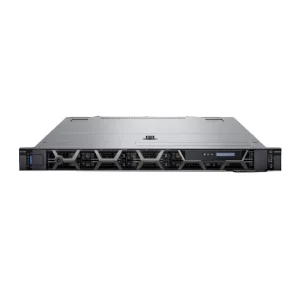
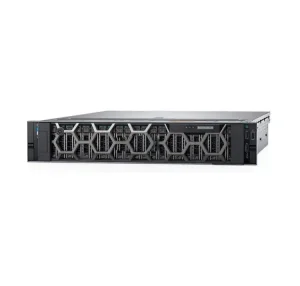
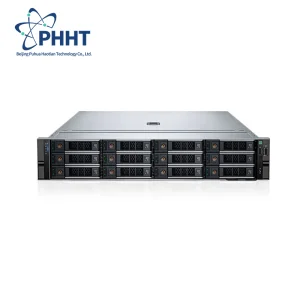
In the era of hyper-connected clinical ecosystems, the intersection of medical engineering, big data analytics, and computational intelligence demands absolute dependability. As a premier CE Certified Health Tech Factory & Exporter with 21 years of solid industry experience (established in 2003), we specialize in delivering the robust hardware backbone required to support critical digital health infrastructure. From low-latency PoE networking components for IoT medical sensors to intensive GPU rack servers that run high-throughput medical image reconstruction and artificial intelligence models, we manufacture to the highest benchmarks of quality and international compliance.
Health Tech has transcended simple patient charting. Modern healthcare platforms involve real-time analytics, federated deep learning for clinical decision support systems (CDSS), high-performance PACS (Picture Archiving and Communication Systems), and automated hospital edge facilities. These workloads necessitate enterprise-grade computational components designed for zero-downtime, maximum data integrity, and strict adherence to safety and electromagnetic standards represented by European Conformity (CE) certifications. Our state-of-the-art production processes combine traceable sourcing, multi-stage testing, and advanced R&D led by qualified graduate engineers to fulfill the complex technical criteria of global healthcare distributors, hospital system integrators, and OEM developers.
The global digital health market is undergoing an unprecedented expansion, projected to surpass USD 600 billion by the late 2020s. This growth is propelled by an aging demographic, the rise of personalized precision medicine, and the rapid deployment of artificial intelligence at the edge. The industrial landscape is divided into three critical layers: the sensor/capture layer (wearable medical devices, digital imaging systems), the transmission layer (high-reliability, low-latency hospital switches and secure networks), and the computational processing layer (AI-driven server farms and on-premises high-density servers).
However, the integration of these systems is heavily regulated. The Transition of Medical Device Regulation (MDR 2017/745) in the EU and equivalent FDA frameworks in North America require every physical component within a patient environment or diagnostic workflow to adhere to rigid safety parameters. Electromagnetic interference (EMI) is a critical factor; clinical servers and networking switches must not disrupt sensitive medical instruments like MRI scanners or ventilators. By provisioning CE-certified infrastructure hardware, we guarantee that our servers and L3-managed switches maintain strict EMI limits, securing an optimal, noise-free, and safe operation within hospitals, outpatient clinics, and laboratory cleanrooms.
"Infrastructure security and data processing velocity are the true determinants of digital healthcare efficacy. A 100ms latency reduction in network transmission translates directly to faster diagnostic delivery and improved patient outcomes."
Geographically, North America and Western Europe remain the primary consumers of high-density medical compute architecture, owing to massive deployments of cloud-native Electronic Health Record (EHR) platforms and clinical artificial intelligence. Simultaneously, Eastern Europe and emerging Asia-Pacific markets are modernizing legacy hospital architectures by integrating local data-processing setups to comply with national sovereign data policies (such as GDPR). This regional fragmentation highlights the necessity for versatile hardware configurations capable of adapting to varying localized architectures, a capability that our R&D facility has championed through custom demand styling and sample processing services.
Synthesizing next-generation network standards and high-density parallel processing to create tomorrow's medical computational foundation.
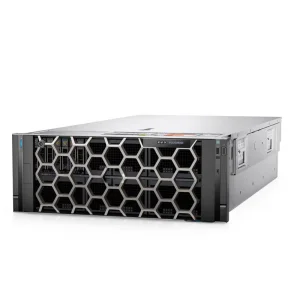
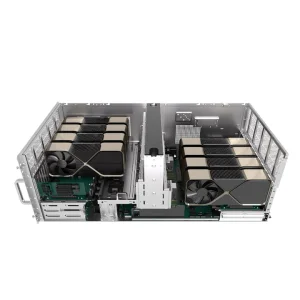
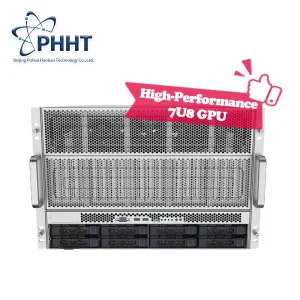
Moving machine learning models from remote cloud datacenters directly to the hospital server room. High-performance GPU servers like the PowerEdge R960/R760 series allow radiologists to run zero-latency AI segmentation on CT and MRI scans, identifying critical anomalies in seconds rather than hours.
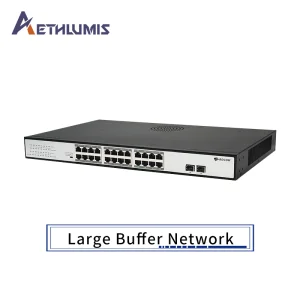
Power-over-Ethernet (PoE) has evolved beyond basic office IP telephones. Modern smart wards rely on 24-Port and 48-Port high-power switches to simultaneously deliver Gigabit data connectivity and electrical power to patient vital monitors, telemetry systems, and smart cameras, eliminating cable clutter and failure points.
Due to severe privacy laws surrounding Protected Health Information (PHI), medical providers are adopting hybrid cloud models. Scalable, high-density L3-managed stackable network switches and dual-socket AMD EPYC/Intel Xeon storage systems enable hospitals to run private clouds that isolate patient databases from the public internet.
The technical roadmap for healthcare hardware revolves around three distinct architectural paradigm shifts: Ultra-High Throughput Bus Architecture (PCIe 5.0 and CXL), Dynamic Power Management, and Autonomous AI Diagnostics Hardware. As our R&D roadmap indicates, future computational platforms will increasingly leverage Compute Express Link (CXL) to share memory pools dynamically between CPUs and GPUs, enabling real-time processing of complex genomic sequences. Concurrently, network switches will scale to support Multi-Gigabit Ethernet (2.5G/5G/10G) over copper to feed high-resolution telemedicine streams and AI camera arrays in operating theaters.
In addition, sustainability is becoming a key purchase driver for global health organizations. By transitioning to high-efficiency Power Distribution Units (PDUs) and incorporating redundant, hot-swappable titanium-rated power supplies in our rackmount designs, we help organizations reduce their carbon footprint while ensuring continuous operation. Over the next five years, the focus will reside heavily on developing smart, adaptive hardware interfaces that allow automated configuration of VLANs for medical and non-medical networks, preventing digital cross-contamination and shielding critical life-support systems from malware or DDoS events.
To demonstrate the real-world utility of our high-performance infrastructure, we explore the integration of these technologies in localized scenarios across global medical centers:
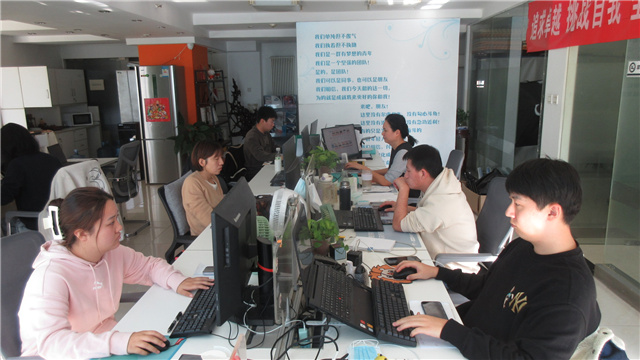
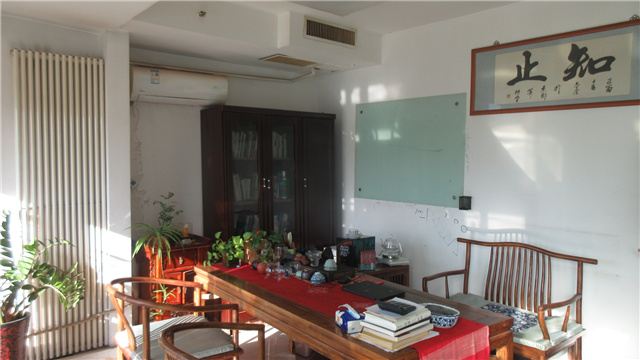
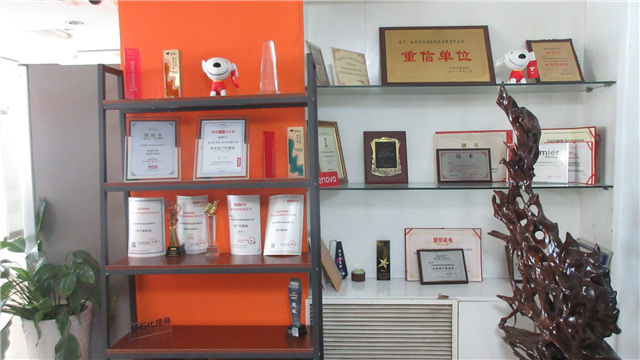
For international buyers and government tenders, procurement involves evaluating not just individual specifications, but cohesive industrial solutions. We offer structured solutions that cover the entire lifecycle of hospital hardware integration: custom chassis branding, custom firmware optimization (BIOS/UEFI level customizations for specific operating environments), and comprehensive pre-shipment compliance validation. Under our strict Quality Control policy, we implement 100% inspection of all products across our production lines. This means that every single server, switch, or robotic control platform is subjected to synthetic load tests, thermal profiling, and network diagnostics before packing, drastically lowering RMA rates for our global distributors.
A transparent look at our historical credentials, testing capabilities, and global trade parameters built over two decades.
| Enterprise Profile & Key Specifications | |
|---|---|
| Company Registration Date | 2003-07-10 (21 Years in Industry) |
| Production Floor Space | 120 ㎡ (Focused Precision Assembly & Testing Lab) |
| Years Exporting | 2 Years of Global Trade and Export Compliance |
| Accepted Languages | English (Technical documentation, sales, and ongoing support) |
| Traceability of Raw Materials | Yes, full component-level tracking from trusted silicon suppliers |
| Product Inspection Method | Rigorous 100% Inspection of all finished products prior to export |
| Quality Control (QC) Structure | Conducted on all production lines with dedicated QA/QC inspector |
| R&D Personnel | 3 Graduate Engineers specializing in hardware design and system optimization |
| Customization Options | Sample processing, graphic processing, and customized on-demand architectures |
| Primary Export Markets | Domestic Market (50%), Eastern Europe (20%), North America (15%) |
| Key Client Categories | Brand businesses, Retailers, Systems Engineers, Wholesalers, Manufacturers, and Private cloud developers |
Our operation is optimized for precision, agility, and absolute technical compliance. Unlike high-volume consumer assembly lines, our 120-square-meter facility functions as a highly specialized engineering lab. Here, our three graduate R&D engineers construct and refine customized high-performance server architectures, verify network latency profiles, and configure managed switch settings tailored to your specific application environment. This specialization allows us to process custom sample requests and execute personalized graphics, chassis styling, and custom firmware layouts with a turn-around speed that larger manufacturers cannot duplicate.
Addressing critical architectural, security, and hardware questions from engineers, compliance officers, and medical procurement leads.
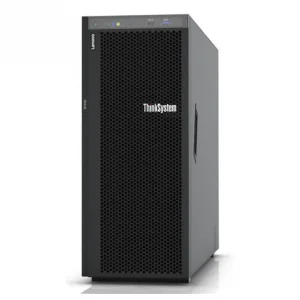
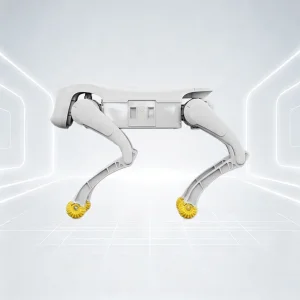
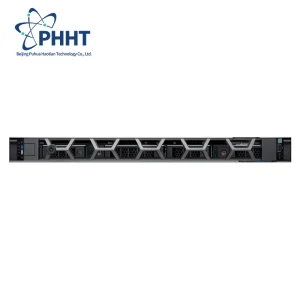
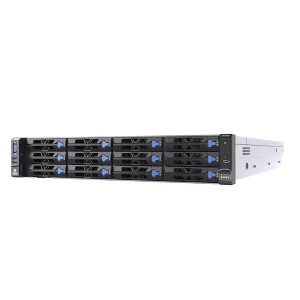
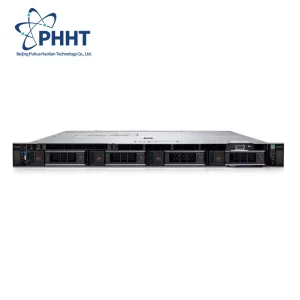
Complete your deployment with our range of high-performance computing, tower systems, AI processing units, and component processors.
 Nexus AI Server