As a leading China Wholesale Audio Visual Infrastructure Manufacturer, we have committed over 21 years to the R&D and custom fabrication of high-bandwidth transmission, routing, and high-density processing technologies. Traditional audio-visual systems are undergoing a historic convergence with enterprise network environments—shifting from legacy analog matrices to fully digital, AI-assisted, and ultra-high-definition AV-over-IP topologies.
Our engineering ecosystem delivers hardware that bridges raw network capabilities with advanced media processing. Leveraging a 100% full-line product inspection protocol, our factory guarantees raw material traceability and long-term operating durability under extreme loads. Whether deploying high-throughput network routing switches to transport uncompressed 4K video or provisioning high-compute rackmount nodes for AI computer vision applications, our solutions ensure absolute signal integrity and system up-time.
The global commercial and enterprise audio-visual ecosystem is experiencing an unprecedented structural transition. Historically, audio-visual setups relied upon proprietary analog transmission lines and highly isolated matrices. Today, the market dictates a transition toward standard Ethernet backbones—a concept widely known as AV-over-IP (Audio-Visual over Internet Protocol). Protocols such as SDVoE (Software Defined Video Over Ethernet), Dante, AES67, and SMPTE ST 2110 have set new performance standards for low-latency transmission, scalability, and multi-endpoint flexibility.
Modern commercial deployments no longer view AV and IT as separate departments. AV hardware is now expected to live natively on the corporate network. This convergence requires that switches, network nodes, and backend processing units maintain enterprise-grade security, extreme thermal resilience, and modular configurations.
This dynamic integration has catalyzed three primary developments across the manufacturing and integration landscape:
Harnessing Layer 2/3 Managed PoE switches to distribute uncompressed 4K signals with near-zero latency over standard Cat6 networks.
Deploying dedicated high-performance server structures containing GPU capabilities to process deep learning algorithms, bionic robotics, and image classification.
Unifying massive storage spaces and network-attached architectures (NAS) to accommodate multi-stream visual backups and lossless digital audio archives.
Enterprise procurement departments, system integrators, and value-added resellers (VARs) are faced with a challenging goal: sourcing high-reliability hardware from overseas factories while minimizing product integration issues and support overhead. Modern AV deployment sites demand high levels of reliability, making standard consumer-grade AV equipment insufficient. Procurement cycles must address the following critical metrics:
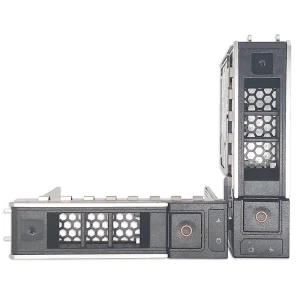
Our manufacturing complex focuses directly on resolving these procurement challenges. By housing R&D engineers with deep experience in hardware design and system integration, we ensure that every system component—from a minor drive carrier bracket to a 48-port fiber core network switch—operates reliably under stressful enterprise workloads.
To design an AV system that handles high performance and massive scale, engineers look at the integration of three distinct technology layers. Below is our blueprint detailing the interaction of these layers:
| System Layer | Core Infrastructure Component | Practical AV/IT Application | |||
|---|---|---|---|---|---|
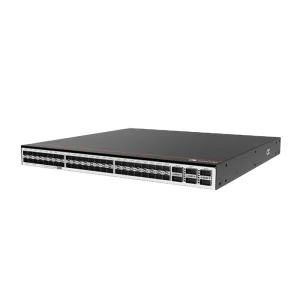
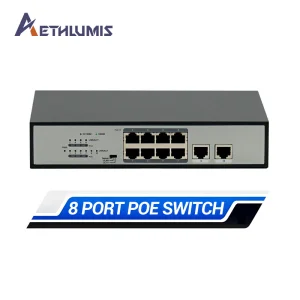
| Endpoint Connectivity & Power | 10-Port / 24-Port Gigabit PoE switches with 6KV lightning/surge protection and VLAN isolation. | Powers and isolates IP PTZ cameras, Dante intercoms, and digital signage players directly on local networks. | High-Speed Signal Backbone | 25GE SFP28 and 100GE QSFP28 core switches (e.g., CloudEngine series). | Acts as the core transport medium for uncompressed UHD video, matrix routing, and high-density audio over IP. |
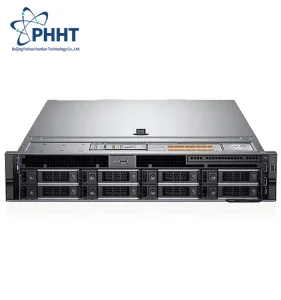
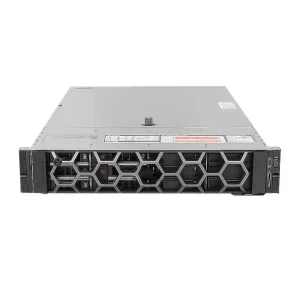
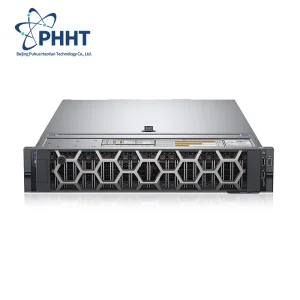
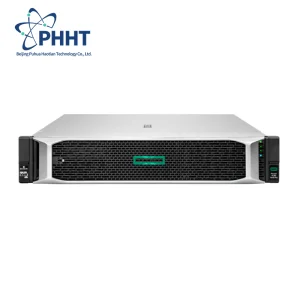
| Central Processing & Analytics | High-Density 2U Rack Servers (PowerEdge / ProLiant Xeon Scalable processors). | Runs video management software (VMS), AI-driven facial recognition, automated tracking, and cloud transcoding. | |||
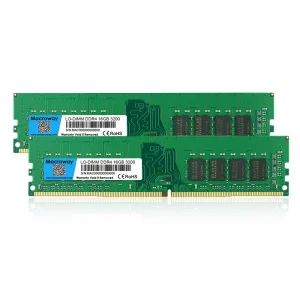
| High-Availability Storage | NAS-optimized storage servers with hot-swappable SAS/SATA drives & ECC Memory. | Guarantees continuous raw recording, archives visual assets, and supports local virtualization databases. |
By producing components that target all three layers of this architecture, our factory provides a unified procurement path. Integrators can source their high-bandwidth networking switches, reliable backup storage arrays, and high-performance server hardware from a single supplier, reducing compatibility issues and simplifying post-sale technical support.
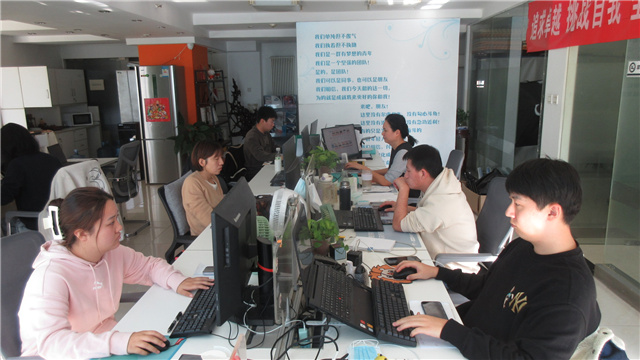
Our quality assurance program is built on strict control and traceability. Unlike manufacturers that rely on batch sampling, our quality team performs a 100% inspection of every device that leaves our facility. This means every network switch is tested for throughput, every server experiences thermal and performance burn-ins, and every memory module is verified for stability.
This attention to detail extends across our customization options, which include:
Our long-term development strategy focuses on the continued convergence of artificial intelligence, high-speed data transmission, and autonomous systems. Our engineering team is currently developing improvements across three key areas:
As video formats transition toward uncompressed 8K resolution and complex spatial audio setups, legacy gigabit ports can struggle under the load. We are actively expanding our range of high-bandwidth networking gear by integrating DDR5 memory architectures and designing switches with 100GE and 400GE uplink capabilities to serve as core routing hubs in large-scale venues.
Modern data centers and enterprise AV hubs require ongoing physical inspections. By integrating autonomous robotic systems, such as our bionic quadruped robot dogs, facilities can automate thermal inspections, visual status monitoring of server racks, and acoustic diagnostics. These robots use edge AI processors to identify faults, check connectivity indicators, and detect cooling leaks before issues escalate.
Higher processing power generates more heat. Our server designs utilize advanced heat-pipe arrays, dual-fan modules, and optimized chassis airflow. These thermal features allow high-density server configurations (such as GPU-heavy 2U racks) to operate continuously in warmer environments, helping reduce overall HVAC cooling costs for the facility.
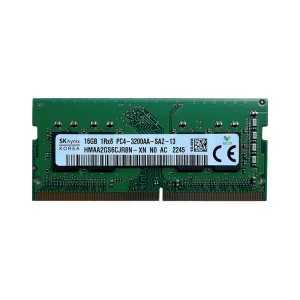
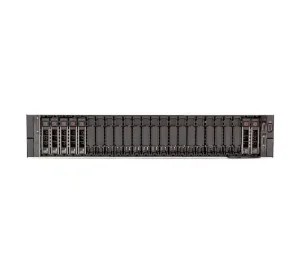

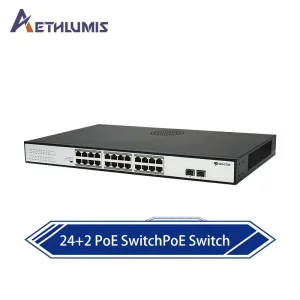
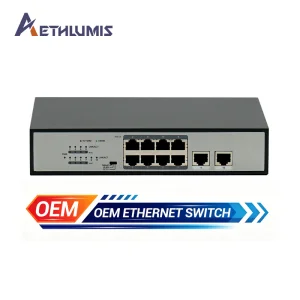
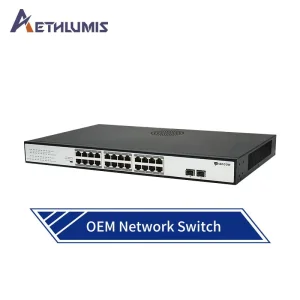
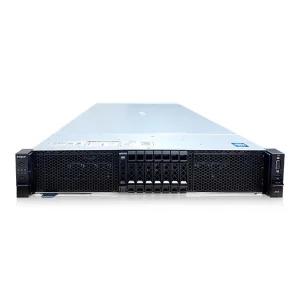
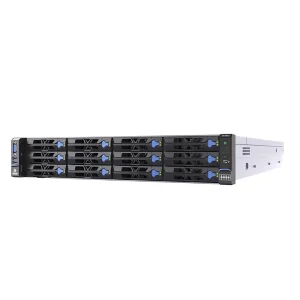
Take a look inside our specialized manufacturing floors where we assemble, test, and package high-performance servers and network switches for global delivery.
 Nexus AI Server