High-performance computational hardware designed for data centers, private cloud modernization, and advanced computing.
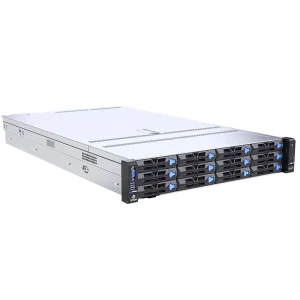
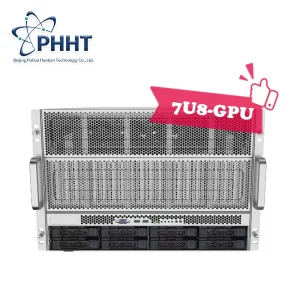
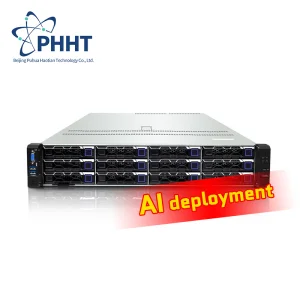
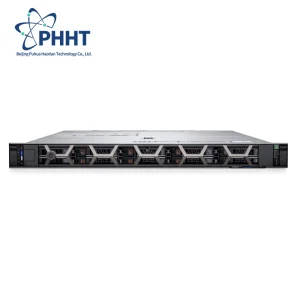
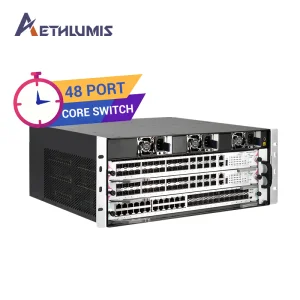
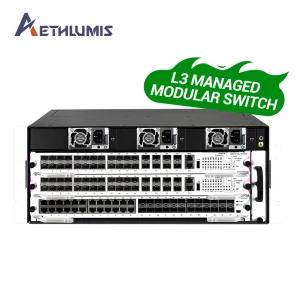
In the era of hyper-scale cloud deployments, enterprise workloads have shifted rapidly from traditional monolithic database calls to parallelized processing systems. A modern rack server is no longer just a physical chassis enclosing a motherboard; it is a highly integrated thermal and digital compute engine. Sourcing directly from a China wholesale rack server factory provides access to cutting-edge research in power distribution, signal integrity, and structural modularity.
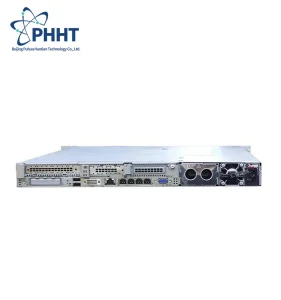
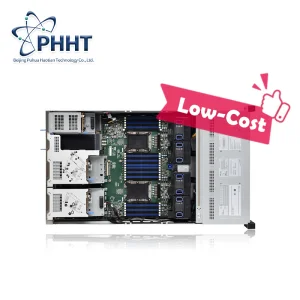
The industry classifications—1U, 2U, 4U, and 7U form factors—represent precise responses to spatial density and heat constraints. 1U configurations optimize rack density for hyper-converged compute nodes but require high-RPM counter-rotating fans to maintain thermal equilibriums across high-TDP (Thermal Design Power) processors. 2U and 4U architectures strike a critical balance, affording expanded PCIe Gen 5 lanes to accommodate acceleration hardware, deep NVMe arrays, and secondary redundant power paths. For machine learning, deep learning, and advanced rendering workloads, the 7U server category represents the apex of vertical system density, integrating multi-socket CPU topologies alongside massive multi-GPU matrix arrays.
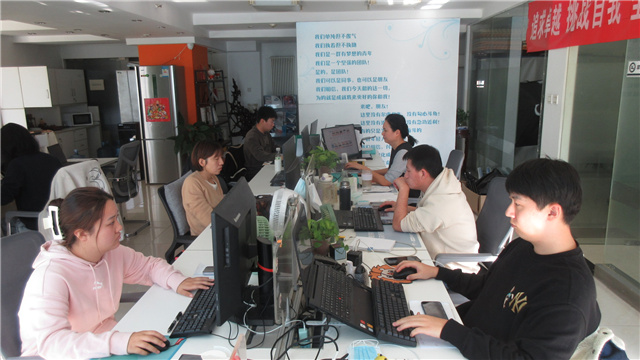
With over 21 years of hardware engineering history, our custom integration center maintains strict production control systems.
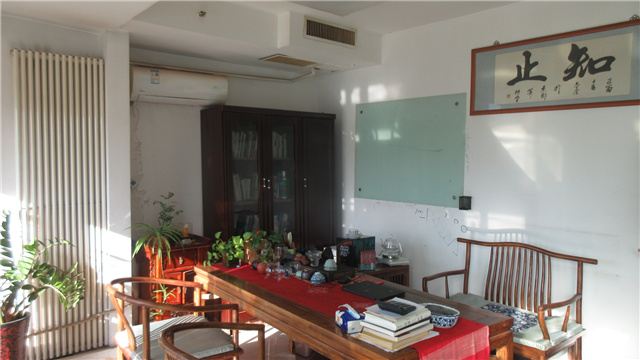
The operational capabilities of a modern rack server factory are defined by its R&D flexibility and rigor in quality assurance. Standard assembly is not enough; true enterprise-grade output requires custom backplane design, complex BIOS/BMC firmware configurations, and detailed thermal profiling under synthetic stress testing environments. Our facility provides complete sample processing, graphic layout processing, and fully customized on-demand architectures, supported by three graduate-level engineering specialists.
Maintaining reliability across multi-site deployments demands rigorous component control. Our quality assurance protocol includes full raw material traceability and 100% inspection across all production runs. By auditing memory modules, storage controllers, and power supplies from the point of origin, we ensure that every server shipped meets the MTBF (Mean Time Between Failures) standards required for round-the-clock enterprise workloads.
Resolving computational bottlenecks through matching network bandwidth configurations.
Deploying high-core processors like the AMD EPYC and Intel Xeon Scalable families requires motherboard architectures capable of handling fast system busses and many PCIe lanes. Our design layouts focus on low impedance paths, ensuring that memory controllers operate at peak throughput without thermal throttling.
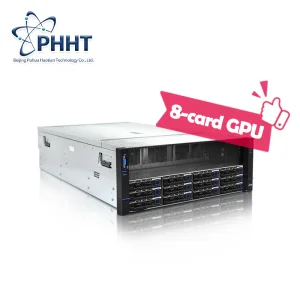
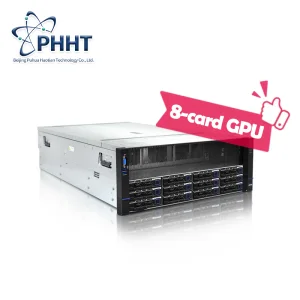
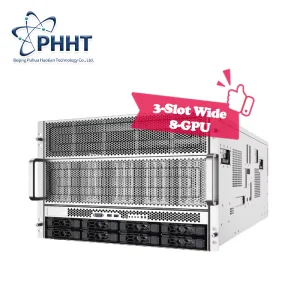
Generative AI model training, computer vision, and scientific rendering need high-bandwidth GPU connections. Integrating up to eight high-performance GPUs in a 4U or 7U frame requires custom PCIe switch boards that minimize latency between accelerators and host memories.
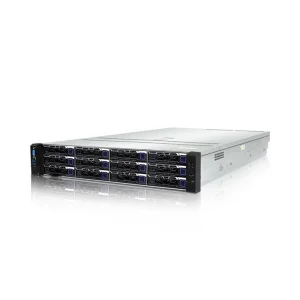
Modern workloads need fast storage access. From redundant NAS backup appliances to ultra-fast NVMe pools, our chassis designs offer flexible hot-swap drive backplanes. This enables simple storage tiering and minimizes service interruption during drive maintenance.
| Server Chassis Type | Primary Compute Profile | PCIe Lane Capacities | Cooling Design | Best Use Cases |
|---|---|---|---|---|
| 1U Form Factor | Single/Dual AMD EPYC or Intel Xeon | Up to 48 lanes (PCIe Gen 5) | High-velocity 40mm counter-rotating fans | Web hosting, Edge computation, virtualization nodes |
| 2U Form Factor | Dual socket, mid-density GPU option | Up to 128 lanes (PCIe Gen 5) | 80mm redundant hot-swap fan modules | Enterprise databases, ERP platforms, private clouds |
| 4U Form Factor | Multi-socket, up to 8 accelerator slots | Up to 160 lanes (PCIe Gen 5) | Multi-zone high static pressure arrays | AI model inference, rendering clusters, deep learning |
| 7U Form Factor | Multi-socket baseboard + 8-10 GPU arrays | Comprehensive system interconnectivity | Optimized compartmental liquid or air assist | Large Language Model (LLM) training, simulation |
High-speed computation is only as effective as the networking infrastructure supporting it. In cluster environments, compute nodes generate massive east-west traffic. Standard Layer 2 switches are often insufficient for routing data between large database pools, storage clusters, and GPU arrays without introducing significant latency.
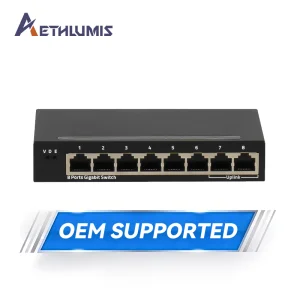
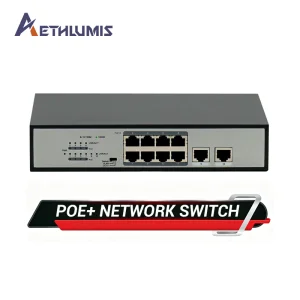
Integrating Layer 3 Managed Core Network Switches into server architectures resolves this issue. Supporting packet forwarding capacities up to 1.47Tbps and forwarding rates of 1104Mpps, these systems handle complex routing processes directly at the hardware layer. Support for critical routing protocols—such as OSPF (Open Shortest Path First), BGP (Border Gateway Protocol), and MPLS (Multiprotocol Label Switching)—allows for intelligent path selection, link redundancy, and congestion management. Additionally, stackable switch designs allow operators to manage multiple physical units as a single logical device, simplifying administration and expanding system capacity.
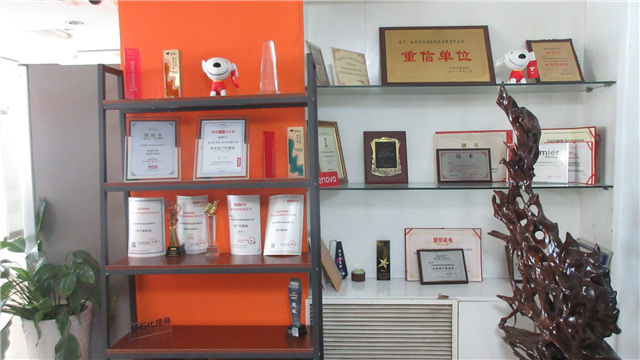
Verified profile and structural specs illustrating our operational capabilities and technical expertise.
Our hardware integration solutions are optimized for global enterprise applications.
Our virtualization platform solutions run on multi-core architectures like AMD EPYC. These configurations support deep VM densities, low hypervisor overhead, and reliable performance in environments running VMware ESXi, Proxmox, or KVM hypervisors.
Our custom GPU platforms support up to eight accelerators per chassis, with high-volume airflow designs and efficient power delivery. This setup ensures stable performance during long machine learning training cycles and demanding batch inference workloads.
Our custom high-capacity NAS and SAN storage systems are built with features like hot-swappable drives, dual host controllers, and ECC system memory. This design provides data redundancy and reliability for enterprise ERP databases and large archives.
How to evaluate compliance, technical capabilities, and supply chain logistics when sourcing rackmount hardware.
Sourcing hardware internationally requires verifying compatibility and engineering standards. A reliable partner should offer:
Hardware must satisfy regulatory certifications and transport protocols to ensure smooth customs processing and operation:
Frequently asked questions regarding customization, deployment, and testing protocols.
Additional networking hardware, storage systems, and specialized compute solutions.
 Nexus AI Server