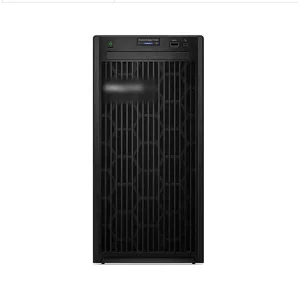
Deploy verified enterprise solutions, bare-metal server configurations, and customized networking appliances engineered for critical application hosting.

How bespoke processors and specialized systems mitigate the physical limitations of Moore's Law and elevate performance-per-watt metrics.
For decades, general-purpose central processing units defined the limits of computing infrastructure. However, the modernization of machine learning (ML), high-performance analytics, and massive database storage has rendered standard architectures inefficient. As a specialized OEM CPU supplier, our engineering core focuses on custom physical design constraints, optimized Instruction Set Architectures (ISAs), and application-specific integrated topologies.
By bypassing standard monolithic architectures, hardware architects can configure optimized thermal design envelopes (TDP), tailor internal bus routing, and deploy customized caching tiers. This targeted integration reduces cache miss rates and boosts instruction pipeline throughput for specific workloads like deep learning or database queries.
To navigate the limitations of wafer manufacturing yields, our OEM processor architecture incorporates advanced chiplet methodologies. Using the Universal Chiplet Interconnect Express (UCIe) standard, we combine silicon dies created at different processing nodes. For example, high-speed compute dies can run on 3nm/5nm processes, while I/O controllers can sit on cost-effective legacy nodes.
This chiplet integration allows cloud service providers to request customized processors with varying quantities of compute cores, integrated graphics, memory controllers, and specialized hardware accelerators. As a result, companies can optimize cost-to-performance ratios without paying for unnecessary silicon space.
Strategic view of upcoming processing technologies, sub-nanometer node transitions, and high-bandwidth interconnect infrastructures.
The roadmap shows a shift from 5nm FinFET technologies to 3nm and 2nm Gate-All-Around (GAA) nanosheet structures. Our design pipeline integrates GAA architecture to improve electrostatic control, decrease sub-threshold leakage, and deliver a 15% to 20% performance boost at the same power envelope compared to traditional FinFET platforms.
We are moving past 2D planar layouts to adopt 2.5D and 3D stacking techniques, such as TSVs (Through-Silicon Vias) and hybrid copper-to-copper bonding. These innovations reduce latency and increase interconnect density, allowing for direct integration of High-Bandwidth Memory (HBM3/HBM4) onto the CPU substrate.
While x86 and ARM remain essential, open RISC-V architectures are gaining traction for custom accelerators. Our R&D division has spent over two decades developing custom microarchitectures. We are prepared to assist clients looking to integrate specialized instruction sets for cryptographic functions, media processing, and AI workflows.
Over two decades of production experience, strict quality control systems, and custom R&D capabilities for global markets.
| Operational Metric | Specifications & Verification Standard |
|---|---|
| Corporate Identity & History | Established July 10, 2003. Over 21 years of specialized performance-computing experience, with 2 years of dedicated international export operations. |
| Manufacturing Footprint | 120 Square Meters of specialized high-yield prototyping cleanroom and test space. |
| Quality Control (QC) Program | 100% product inspection methodology. Every component undergoes rigorous diagnostic testing before shipping. QA/QC operations are managed by a dedicated chief inspector. |
| Global Market Footprint | Domestic Market (50%), Eastern Europe (20%), North America (15%), with remaining distribution across Asia-Pacific and South America. |
| Target Buyer Segments | Brand enterprises, industrial retailers, system integration engineers, hardware wholesalers, and custom equipment manufacturers. |
| Customization Capabilities | Complete sample processing, complex layout design, graphic processing, and on-demand customer customization. |
Bridging component design with end-to-end IT infrastructure. We custom-configure systems to optimize bandwidth, computing power, and energy consumption.
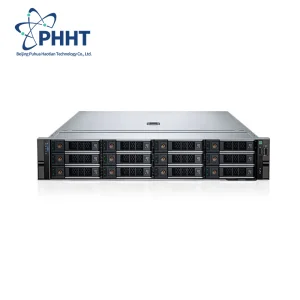
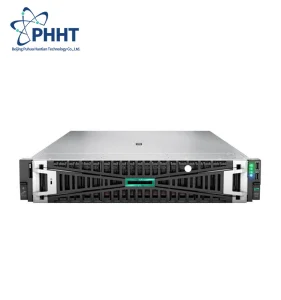
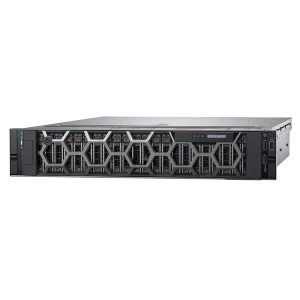
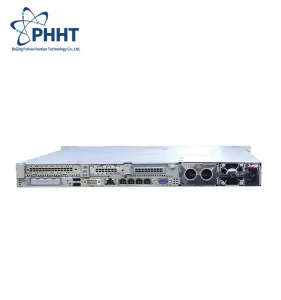
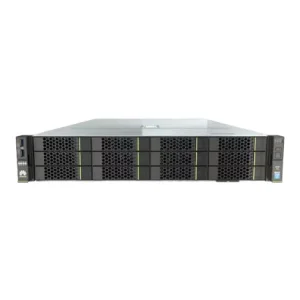
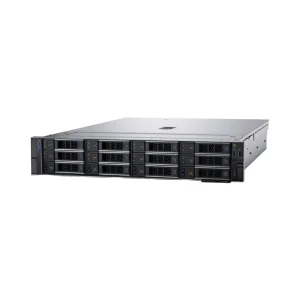
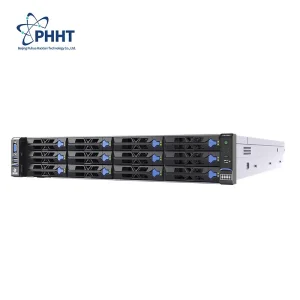
Modern data centers hosting virtualization platforms require high core density and broad memory pipelines. Platforms like the PowerEdge R760 and HPE ProLiant DL380 Gen11 depend on dual-processor architectures to run hundreds of isolated virtual machines (VMs) simultaneously. In artificial intelligence deployments, these host servers must also manage high-speed PCIe Gen 5 lanes, allowing for low-latency communication between the host CPU and high-performance GPUs.
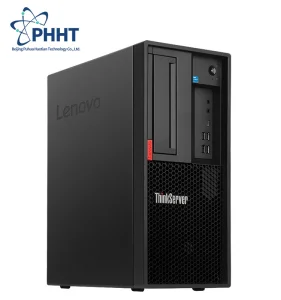
Branch offices and mid-sized enterprises often require on-premises servers like the Lenovo TS80X to run local ERP databases and accounting applications. These systems run continuously and need processors with ECC (Error-Correcting Code) memory support to prevent soft data errors. Using custom-configured TDP settings, these tower servers provide quiet, reliable performance in office environments without requiring specialized server cooling systems.
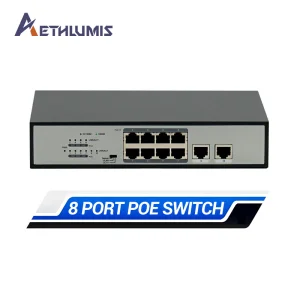
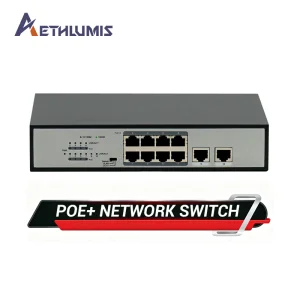
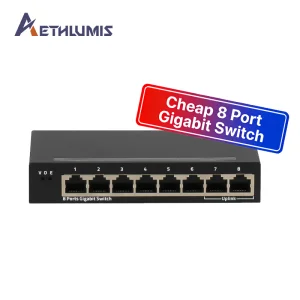
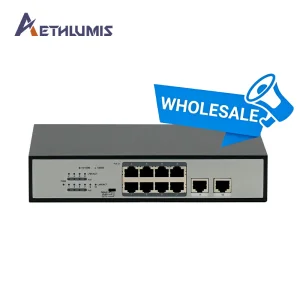
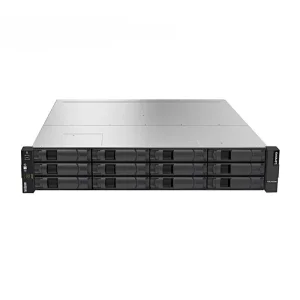
Fast data storage is only as good as the network routing it. Modern NAS platforms like the DH4000H require energy-efficient processor nodes to manage RAID calculations, network file shares, and local encryption tasks. Similarly, Gigabit PoE switches need specialized switching silicon to support VLAN routing, packet inspection, and power distribution without experiencing latency bottlenecks.
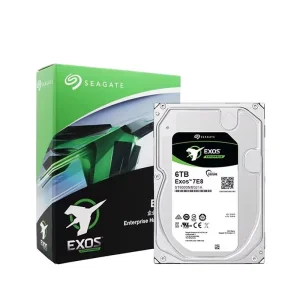
By purchasing server systems alongside custom components, enterprises ensure complete hardware compatibility. Sourcing CPUs, system chassis, high-speed storage drives, and network controllers from a single manufacturing ecosystem simplifies long-term IT maintenance and keeps firmware baselines aligned.
Leveraging domestic production ecosystems, raw material tracking, and automated testing to ensure global supply stability.
Our manufacturing facility in China integrates advanced Factory 4.0 standards. We combine automated surface-mount assembly (SMT) with digital testing environments. Because we trace 100% of our raw materials, we can document the origin of every silicon wafer, substrate, capacitor, and resistor. This traceability helps mitigate potential vulnerabilities in the supply chain and ensures consistent manufacturing quality.
Operating out of China's core electronics hubs gives us direct access to essential component suppliers. This network allows us to secure raw materials and configure systems quickly, keeping production moving even during global supply shortages. In addition, our close partnerships with local logic chip, storage, and circuit board manufacturers help keep production costs stable and predictable.
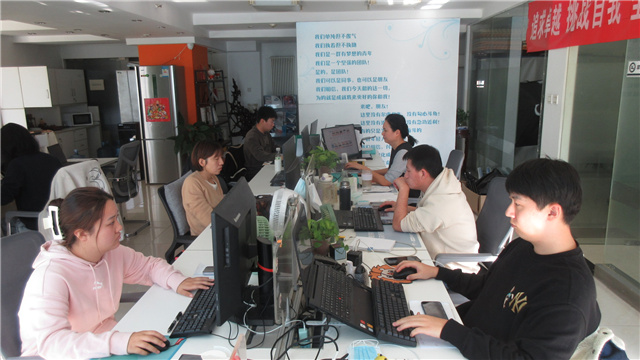
Our experienced R&D team manages the transition from prototype designs to bulk assembly. With advanced degrees in microelectronics and systems design, our engineers verify that every customized CPU design aligns with international standards for signal integrity, power distribution, and thermal performance.
Meeting international certifications, export rules, and hardware security requirements across different regions.
We ensure all products meet key international standards, including CE, FCC, RoHS, and UL approvals. Our compliance engineers review designs to satisfy electromagnetic interference (EMI) guidelines, energy conservation rules, and hazardous substance standards before shipping to clients in North America and Europe.
We modify BIOS, UEFI, and out-of-band management tools to support different languages and localized server administration. This helps engineering teams deploy platforms without needing post-installation localization changes.
Our platforms support hardware-level Root-of-Trust (RoT), Secure Boot, and cryptographic TPM 2.0 modules. These features protect firmware from unauthorized modifications and keep boot sequences secure throughout the hardware life cycle.
Answers to common operational, manufacturing, and technical questions for global system procurement.
A1: We run a 100% inspection protocol across our production lines. Every motherboard, processor, and network switch undergoes automated optical inspection (AOI), in-circuit testing (ICT), and functional burn-in tests at high temperatures. Our traceability program records component origins to ensure high reliability before shipping.
A2: Yes. Our R&D team provides comprehensive firmware customization services. We can embed client security certificates, pre-configure hardware-level hypervisor settings, modify ACPI tables for unique operating systems, and add company branding to boot screens.
A3: Sample development timelines vary by project complexity. Standard server modifications and custom system layouts generally take 2 to 4 weeks. Specialized chiplet or custom silicon development projects follow a tailored schedule based on engineering design targets.
A4: Over our 21-year history, we have established relationships with global freight and compliance networks. We compile all required documentation—including CE, FCC, and RoHS certifications—to ensure shipments pass smoothly through customs in North America, Eastern Europe, and other destination markets.
A5: We offer flexible order minimums to accommodate different phases of product rollouts. Initial prototyping runs and verification samples can start with single-digit units. We scale production support as projects move from testing to mass deployment.
Find compatible memory, storage, compute nodes, and managed switches to support your ongoing IT expansions.
 Nexus AI Server