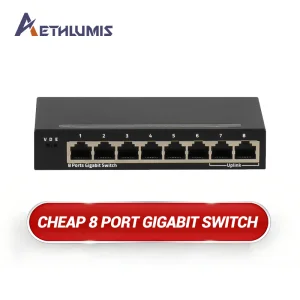
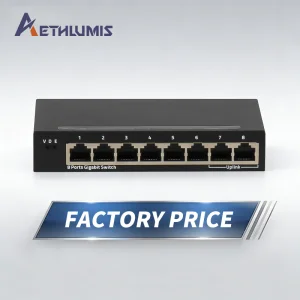
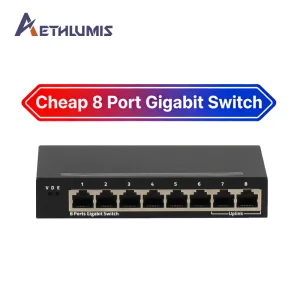
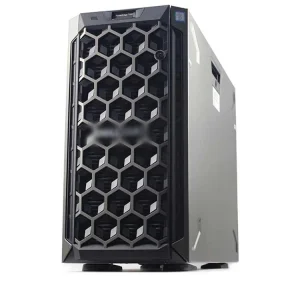
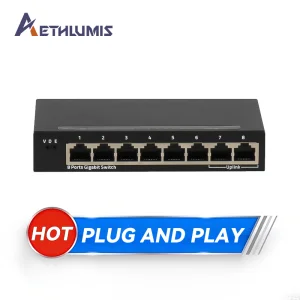
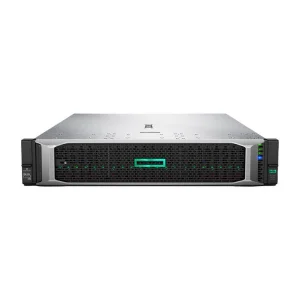
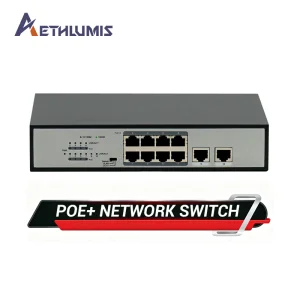
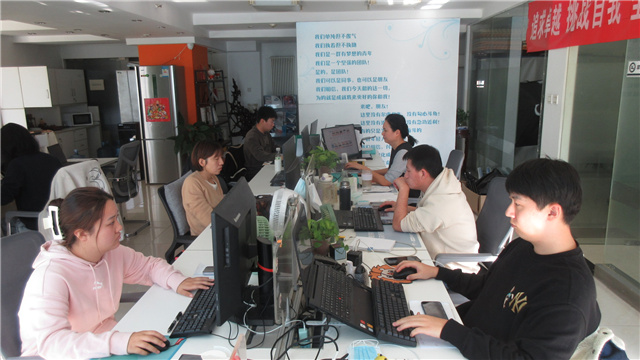
Established in 2003, our factory has served as a foundational infrastructure supplier for over 21 years. Unlike transactional brokers, we maintain a persistent quality loop, enforcing full-product inspections on all active production lines. Traceability is at the core of our manufacturing ethos. By integrating comprehensive component tracking, every unit of unmanaged switch, Poe router, and high-density GPU server carries a verifiable trace history from silicon component level to final enclosure assembly.
Our market orientation balance spans both mature and emerging territories. Currently, our distribution includes the Domestic Chinese Market (50%), Eastern Europe (20%), and North America (15%), servicing brand operators, retail procurement leads, consulting engineers, system integrators, and custom hardware builders alike.
In the era of hyper-scale cloud deployments, hybrid workspaces, and generative AI platforms such as DeepSeek, enterprise infrastructure needs have transitioned from basic connectivity to ultra-low latency, dense storage density, and strict isolation profiles. Hardware operators require solutions that can handle massive data streams without bottlenecking the networking or compute layers.
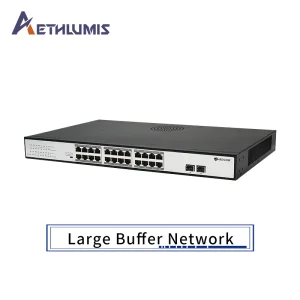
Modern LAN networks rely heavily on unmanaged switches featuring hardware VLAN isolation. By using physical DIP switches, operators can segregate broadcast traffic instantly without utilizing complex CLI setups. This reduces latency, prevents local loop vulnerabilities, and isolates IP surveillance zones from core office systems.
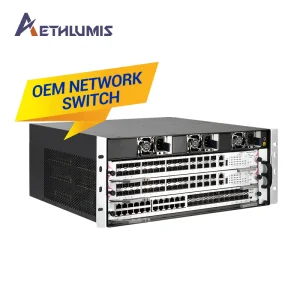
Enterprise dynamic routing requires heavy-duty Layer 3 core switches capable of processing OSPF, BGP, and MPLS stacks at wire speed. By using private mold 48-port solutions offering up to 1.47Tbps of switching capacity, organizations can support dense VM stacking without dropping frames.
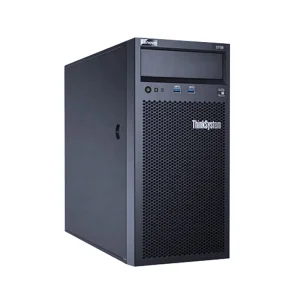
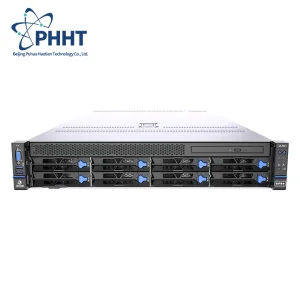
The exponential adoption of generative AI systems necessitates dedicated GPU-dense architectures. Platforms such as the Dell PowerEdge T640, ThinkSystem ST58, and HPE ProLiant Gen11 form the bedrock of AI workloads. These rack/tower installations feature multi-GPU interfaces engineered for optimal data ingestion rates.
China’s manufacturing landscape provides a unified ecosystem that integrates raw silicon fabrication, PCB design, surface-mount technology (SMT), thermal engineering, and global logistics within small geographic corridors. For example, our 21-year manufacturing presence relies on high-grade component suppliers located in proximity, allowing us to source materials with complete traceability and respond rapidly to customized design files.
This high proximity translates into short R&D cycles. Our team of post-graduate R&D engineers can take schematic diagrams or structural processing designs and manufacture physical functional prototypes in days rather than months. Furthermore, high component aggregation guarantees access to the latest integrated circuits, enabling us to consistently supply items with advanced features like 6KV surge protection, intelligent PoE scheduling, and high-efficiency heat dissipation.
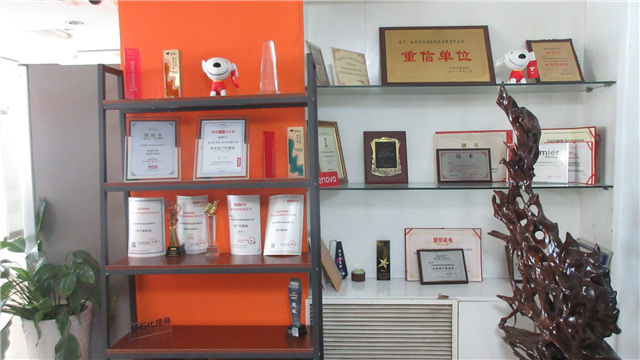
Navigating international export landscapes requires rigorous compliance management. All network interfaces, rackmount servers, and storage solutions are built to satisfy global criteria including CE, FCC, RoHS, and UL standards. By performing 100% inspections on all production runs, we certify that the electromagnetic interference (EMI) profiles and energy efficiencies of our devices align with the stringent regulatory protocols enforced in the North American and Eastern European markets.
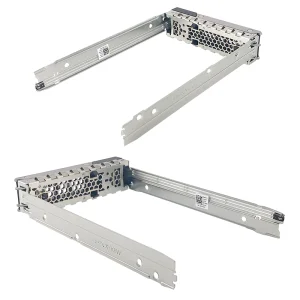
Additionally, we supply localized accessories—including country-specific enterprise power units, mounting brackets, and firmware localized to English and key regional languages—to ensure seamless integration upon arrival. Whether deploying a 2288HV7 microserver in a European colocation data center or distributing 24-Port PoE switches to retail outfits across North America, our products are ready to boot up without compatibility issues.
The demand for compact computing nodes capable of hosting local Large Language Models (LLMs) is surging. Mid-size tower servers like the ThinkSystem ST58 are being repurposed as local inferencing nodes, running complex operational workflows locally to save bandwidth costs and protect sensitive IP.
Standard gigabit networks are moving toward multi-gigabit speeds (2.5G/5G/10G) to feed high-speed Wi-Fi 7 access points. Physical unmanaged switches must offer higher internal bus speeds and deeper memory caches to support these bursting bandwidth demands.
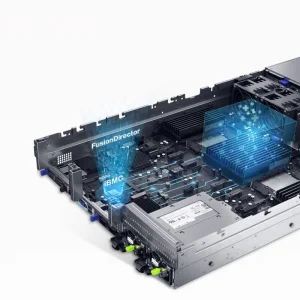
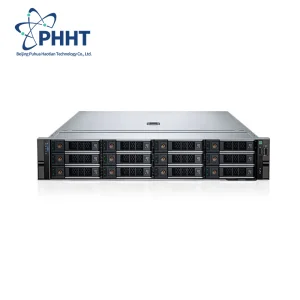
 Nexus AI Server