Modern Enterprise Resource Planning (ERP) systems have evolved past simple data-logging ledgers. Driven by high-velocity manufacturing execution systems (MES), AI-powered forecasting models, and complex global logistics pipelines, today's ERP environments require a highly specialized hardware stack to handle high-concurrency database queries and massive transactional volumes.
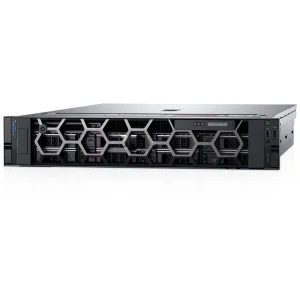
Standard, off-the-shelf server configurations often fall short when executing real-time Material Requirements Planning (MRP) calculations or running predictive AI modules. Our approach to Custom OEM ERP hardware is to tailor computing nodes, memory structures, high-speed storage interfaces, and network switches specifically for the targeted software load. By eliminating hardware bottlenecks through custom hardware layout designs, businesses avoid licensing over-provisions, optimize compute resources, and ensure uninterrupted database access.
When deploying mission-critical software solutions like SAP S/4HANA, Microsoft Dynamics 365, or Oracle Cloud ERP on-premises or in a hybrid cloud framework, infrastructure engineers must match operational workloads to hardware capacity. A tailored OEM server system provides exactly the configuration required—balancing multi-core CPU capabilities for multithreaded SQL databases, and massive storage arrays with customized read/write caching strategies.
Strategic Insight: Designing the hardware layout in parallel with your ERP software architecture decreases overall Total Cost of Ownership (TCO) by up to 35% compared to over-provisioned public cloud virtual instances.
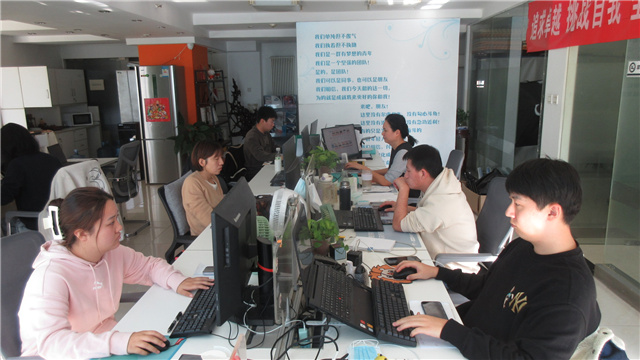
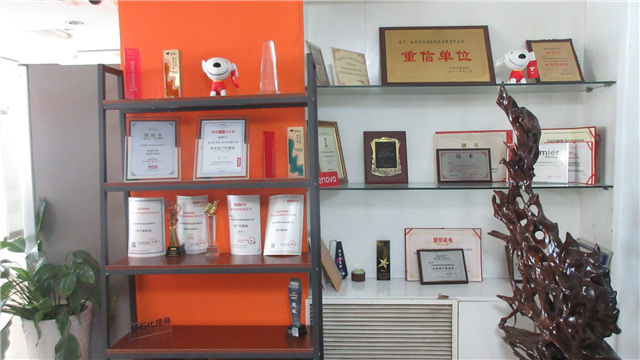
Establishing technical reliability demands complete transparency of manufacturing standards. Leveraging our 21 years of experience in hardware manufacturing, design, and supply chain integration, we offer rigorous custom OEM server configurations designed to meet tough industrial and commercial standards. Our facility is engineered for testing high-performance server architectures, network architectures, and massive storage systems under stress.
Our testing workflows are fully trace-compliant. This structure guarantees that every OEM rack server, PoE network switch, or SAS/SATA storage unit leaving our loading bays performs flawlessly under peak computational stresses. With full trace capabilities on critical electronic components, our clients are assured of hardware components that comply with global industrial resilience baselines.
Scaling enterprise ERP resources requires matching system growth to an operational roadmap. Our architectural configurations address the primary bottlenecks of modern databases: disk I/O, processor scaling, and network latency.
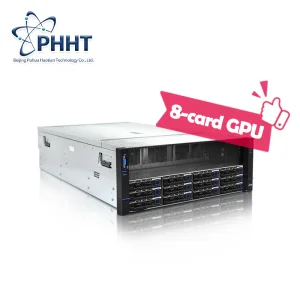
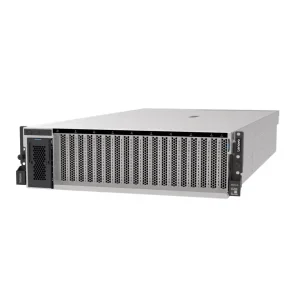
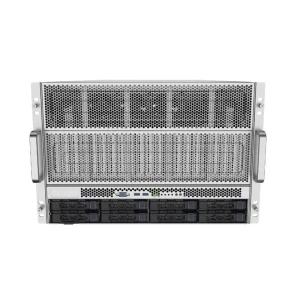
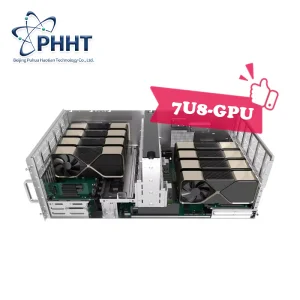
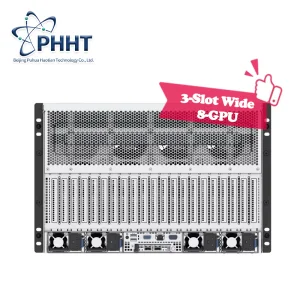
Modern ERP systems utilize artificial intelligence to run predictive logistics models and analyze customer data. Integrating dedicated GPU capabilities (such as our 4U and 7U 8-GPU systems) alongside high-frequency dual CPU configurations (Intel Xeon or AMD EPYC) accelerates analytics pipelines, freeing up standard CPU cycles for transactional database management.
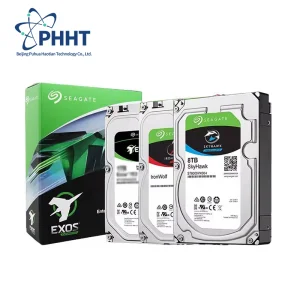
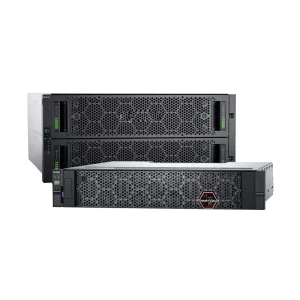
ERP database configurations demand sustained, low-latency disk I/O operations (IOPS). Our solutions focus on mixing massive-capacity storage components (like SAS/SATA Enterprise HDDs and high-density 7.68T SSD modules) to run multi-tier configurations, placing frequently-accessed data files in fast flash memory caches while utilizing high-capacity drives for cold storage archives.
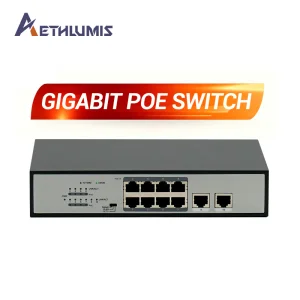
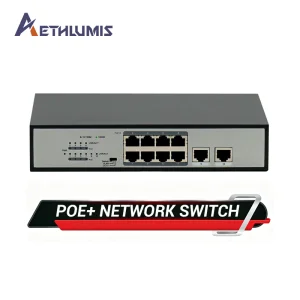
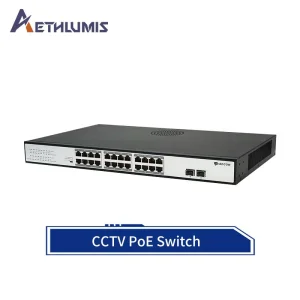
An ERP system is only as reliable as its data pathways. In multi-site factory models, localized edge networks rely on unmanaged and managed PoE switches featuring anti-surge protection (up to 6KV). These resilient nodes guarantee data transfer from local barcode scanners, IoT sensors, and factory terminals back to central ERP database systems without packet loss.
By designing within this technological roadmap, organizations can dynamically upgrade hardware modules as their software architecture changes over time. Scalable rack servers allow storage capacity and PCIe accelerators to be hot-swapped as workloads shift from database entry to heavy AI analytics.
Every geographical market imposes distinct operational parameters on enterprise systems. When deploying hardware to manage data in North America, Europe, or APAC, local hosting setups must adapt to regional compliance frameworks.
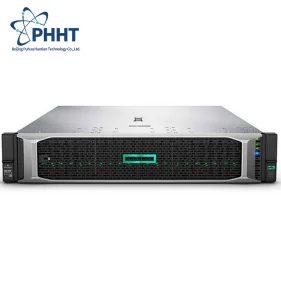
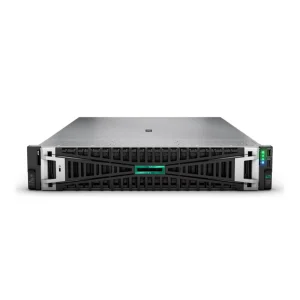
Under frameworks like the General Data Protection Regulation (GDPR) in the European Union, or HIPAA and CCPA in North America, storing sensitive customer information on foreign cloud instances introduces legal and operational risks. Private cloud deployments using custom-built server clusters running behind local firewalls provide the necessary data isolation. Utilizing on-premises HPE ProLiant or PowerEdge chassis architectures ensures absolute control over disk partitions and system logs.
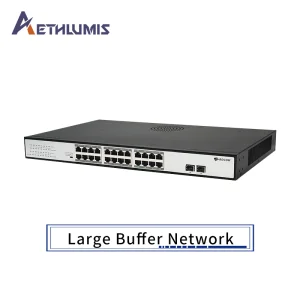
In industrial manufacturing centers, localized ERP architectures run at the edge of the factory floor to ensure operations continue even if primary internet connections fail. These edge nodes act as local processing points, caching transaction queues and synchronizing with corporate HQ during off-peak times. Unmanaged 24-port PoE switches connect IoT hardware to these local servers, keeping data pipelines online across the facility.
The global enterprise IT landscape requires supply chains that are both agile and cost-effective. Sourcing custom server hardware from established Chinese OEM manufacturers offers significant advantages in component sourcing, customized testing, and production speed.
Our manufacturing facilities benefit from proximity to major component suppliers, reducing the time required to source rare elements, high-density PCBs, and physical rack enclosures. By using direct factory integrations, our graduate R&D engineers can take customized specifications—such as unique chassis mounting dimensions or custom internal cooling designs—and deliver sample prototypes for testing in our dedicated 120㎡ verification lab.
This integration enables high cost-efficiency and quick scaling, allowing us to build, stress-test, and ship complete server packages to international buyers without the delays common in fractured component supply chains. Our 100% pre-shipment quality checks confirm that every GPU accelerator, network switch ports, and drive controller is verified to perform reliably before leaving the factory.
As global data generation grows, the reliance on single-tenant cloud ecosystems is giving way to hybrid IT strategies. Organizations now use on-premises server clusters to run core databases while using public cloud services for elastic user demand. This hybrid structure requires clean communication between local systems and the cloud.
Looking forward, modern hardware design must incorporate higher power efficiencies, advanced thermal management systems to handle multi-GPU computing, and built-in network security protections. By implementing high-surge-protected, unmanaged switches alongside multi-core virtualization servers, companies can build local networks prepared for next-generation automated industrial setups.
Custom OEM hardware gives businesses complete control over components, data isolation, and cost structures. Hosting ERP databases locally avoids recurring cloud subscription costs, prevents vendor lock-in, and maintains data localization inside corporate firewalls to simplify compliance with GDPR, HIPAA, and regional cybersecurity laws.
While database queries run primarily on CPUs, modern ERP platforms use GPUs to accelerate real-time analysis, predictive supply chain modeling, and customer machine-learning pipelines. Offloading mathematical calculations to GPUs leaves CPUs free to handle transaction records without latency spikes.
In manufacturing environments, voltage spikes caused by heavy machinery can damage network equipment. Using PoE switches with up to 6KV surge protection ensures that remote IoT sensors, data collection terminals, and security cameras remain safely connected to the central database server.
We implement a strict quality control workflow that includes full traceability of raw materials and components, inline testing across all production stages, and a 100% final pre-shipment inspection. All stress tests are conducted by experienced QA personnel in our specialized 120㎡ laboratory.
We provide comprehensive customization services including custom hardware layouts, custom chassis graphics and logos, special bracket designs, pre-installed operating systems, and custom storage arrays. Projects are managed by our graduate engineering team to meet your exact deployment requirements.
 Nexus AI Server