Explore our highly requested server architectures and enterprise networking products sourced directly for global datacenters.
Transparent production data highlighting our experience, control, and capabilities in high-end computing supply chains.
In the age of hyperscale virtualization, advanced artificial intelligence, and massive enterprise datasets, selecting a supply chain partner for enterprise computing hardware is a critical infrastructure decision. Large businesses, cloud service providers, and system integrators require hardware that offers more than just processing power—they need reliability, predictability, customization capability, and strict security controls. HPE (Hewlett Packard Enterprise) ProLiant rack and tower servers represent the pinnacle of this industry-standard computing paradigm.
"Procurement officers and Chief Technology Officers (CTOs) must look beyond simple unit economics. Achieving high performance, low latency, and robust hardware-level security requires understanding the integration process, component traceability, and architectural transitions of the equipment being deployed."
Understanding the difference between OEM assembly plants, authorized integration facilities, and custom design houses is critical for building a resilient IT hardware pipeline. A standard server manufacturing process follows several levels of complexity:
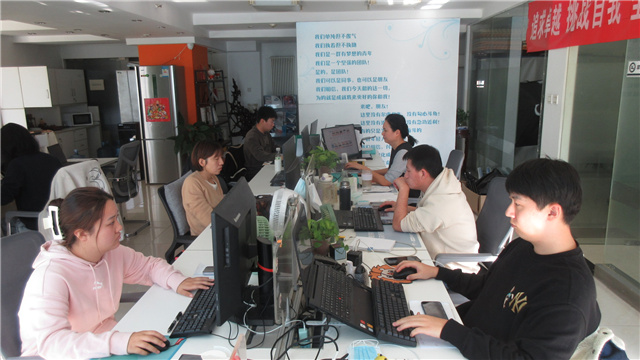
Our integration capabilities focus heavily on L10 customization and rigorous hardware validation. With 21 years of experience in the enterprise computing industry, we offer customers bespoke configurations for complex workloads, complete with component traceability and strict quality controls. Our facility conducts 100% inspection on all incoming hardware components, guaranteeing that only authentic, certified silicon and enterprise storage arrays enter our integration lines.
Enterprise buyers must balance long-term planning with current technological demands when choosing between HPE ProLiant Gen10 and Gen11 architectures. Both platforms are widely used, but they cater to different performance requirements and budgets.
| Architecture Feature | HPE ProLiant Gen10 / Gen10 Plus | HPE ProLiant Gen11 |
|---|---|---|
| Processor Generations Supported | Intel Xeon Scalable 1st/2nd/3rd Gen / AMD EPYC 7002/7003 Series | Intel Xeon Scalable 4th/5th Gen / AMD EPYC 9004 Series |
| Memory Interface | DDR4 (up to 2933 MHz or 3200 MHz on Gen10 Plus) | DDR5 (up to 4800 MHz or 5600 MHz) |
| System PCIe Bus Speed | PCIe Gen3 / PCIe Gen4 | PCIe Gen5 (Double the throughput of Gen4) |
| CXL Support | No CXL support | CXL 1.1 / 2.0 (Compute Express Link for memory expansion) |
| Silicon Root of Trust | iLO 5 Security chip integration | iLO 6 Security chip with upgraded cryptology features |
| Optimal Workload Targets | Legacy virtualization, ERP hosting, office storage databases | Deep learning, LLM fine-tuning, high-density AI workloads, real-time analytics |
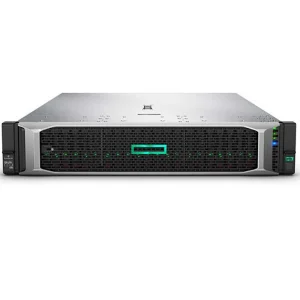
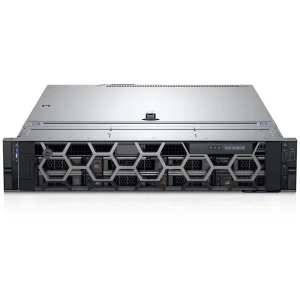
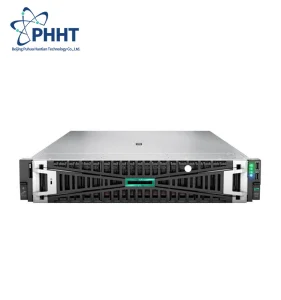
The HPE ProLiant DL380 series remains one of the world's most widely deployed 2U rack servers. The transition from Gen10 to Gen11 brings massive improvements in core density and storage throughput. In Gen10 configurations, users enjoy reliable performance from Intel Xeon Scalable processors, while Gen11 supports up to 8TB of DDR5 memory per socket. This memory bandwidth is critical for high-concurrency database platforms and virtual desktop infrastructures (VDI).
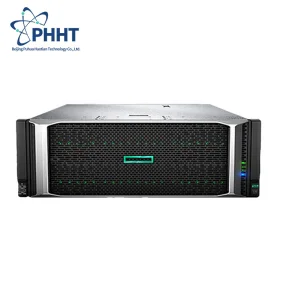
For workloads requiring maximum vertical scalability (Scale-Up), the HPE ProLiant DL580 Gen10 is a powerhouse 4U chassis that supports up to four Intel Xeon Scalable processors. This layout is designed for mission-critical enterprise virtualization, large SAP HANA deployments, and heavy AI inference jobs. With space for multiple high-performance double-width GPUs, the DL580 Gen10 serves as an intermediate compute layer for deep learning applications without requiring a transition to full liquid-cooled infrastructure.
Procuring enterprise hardware on a global scale requires addressing three main bottlenecks: component lead times, hardware validation, and international logistics.
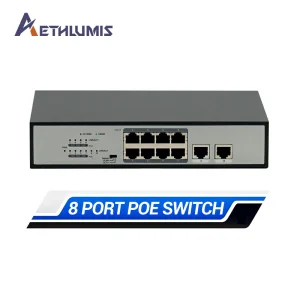
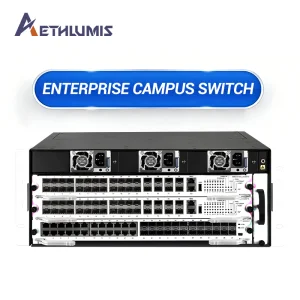
Standard enterprise hardware delivery from traditional factory channels can take weeks or even months due to semiconductor supply fluctuations. Sourcing from experienced integrators with ready stock is a reliable alternative. By maintaining direct relationships with component factories, we keep key items—including system boards, Xeon/EPYC processors, registered DIMMs, and enterprise switches—in stock. This allows us to shorten lead times for custom (CTO) server orders.
Many organizations purchase BTO (Build-to-Order) servers, only to spend additional time installing custom hard drives, cards, or memory. Sourcing directly from an integration facility allows you to receive ready-to-deploy systems configured to your specifications. Our graduate R&D engineers can customize system firmware, set up RAID groups, configure iLO IP addresses, and run custom stress tests before shipping.
Counterfeit hardware is a persistent concern in the grey market. Purchasing through certified networks that offer full component traceability protects your business from premature hardware failures, security vulnerabilities, and firmware lockouts. Our strict QA workflow inspects every memory module and controller serial number to ensure authenticity and durability.
Servers do not operate in isolation; they are parts of larger software-defined ecosystems. Designing the right hardware requires matching the platform to the application.
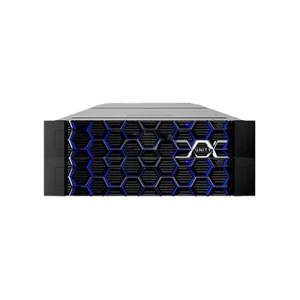
For hybrid cloud setups using VMware ESXi, Microsoft Hyper-V, or Proxmox VE, server density is key to controlling licensing costs. Using dual-socket platforms like the HPE ProLiant DL360 or DL380 Gen10/Gen11 allows you to run hundreds of virtual machines in a compact space. Combined with high-capacity SAN arrays like the PowerVault ME5024, enterprises can build redundant, fail-safe storage clusters that support live migrations and disaster recovery plans.
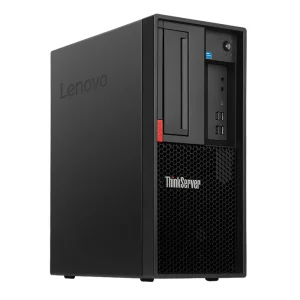
ERP environments (such as SAP, Oracle, and Microsoft Dynamics) require fast storage response times and high memory reliability. Integrating server configurations with NVMe PCIe Gen4/Gen5 SSDs ensures that transaction processing databases do not encounter storage IOPS bottlenecks. For small to medium enterprise offices, tower form-factors like the Lenovo TS80X and TS90X offer a quiet, cost-effective way to run local ERP databases and domain controllers without needing dedicated server rooms.
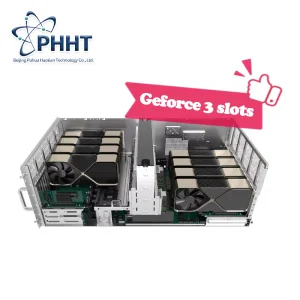
Large language models and neural networks require massive GPU resources. High-density server platforms, such as 7U 8 GPU rack systems, are built to handle the intense thermal and power demands of modern accelerators like the NVIDIA H100 and L40S. These servers are ideal for private AI clusters, research labs, and automated industrial visual inspection systems.
Our commitment to hardware quality is backed by a structured testing process. We believe that a server should only be installed in a production rack once it has been fully validated.
The server industry is shifting toward more modular, efficient architectures. The introduction of PCIe Gen5 doubling data bandwidth and CXL (Compute Express Link) enabling shared memory pools are changing how data centers are built. Future IT deployments will focus heavily on power efficiency. Choosing platforms with high-efficiency titanium-grade power supplies and advanced thermal management reduces operational costs (OpEx) while supporting sustainability goals.
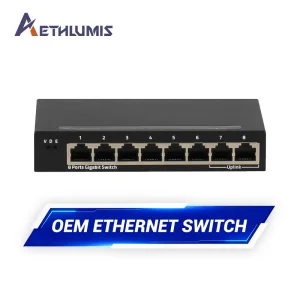
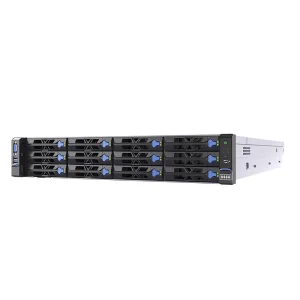
Select switching systems, network storage devices, and multi-socket compute nodes for your enterprise architecture.
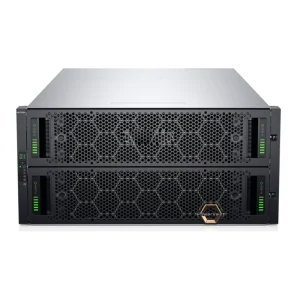
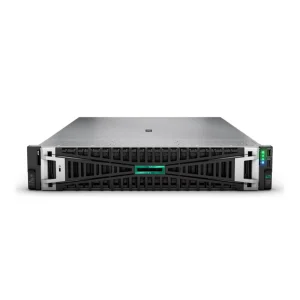

Answers to common questions about sourcing, customization, and deployment of enterprise server hardware.
HPE ProLiant Gen11 servers support DDR5 memory and PCIe Gen5 interfaces, offering double the memory bandwidth and expansion card speeds of Gen10. Gen11 also supports CXL, which is useful for large databases and high-density virtualization. For simpler application hosting or budget-conscious setups, Gen10 servers remain a reliable and cost-effective option.
We run a structured 100% inspection process on all integrated systems. This includes checking component serialization, validating memory channels, and running a 24-to-48-hour hardware burn-in test under load. This process helps identify early-stage component defects before the system is shipped to you.
Yes. We specialize in custom L10 configurations. We can build servers with specific processors, memory configurations, host bus adapters, storage configurations (NVMe/SAS/SATA), and dynamic network interface cards (NICs) to meet your application requirements.
The HPE Silicon Root of Trust links server firmware directly to custom ASIC chips (such as the iLO 5 or iLO 6 management controller). This chip performs a cryptographic check of the BIOS and boot firmware. If modified or compromised firmware is detected, the server will not boot, protecting the system from rootkits and unauthorized firmware alterations.
Rack servers (like the ProLiant DL380, a 2U rack server) are built for standard data center cabinets. They offer high density, redundant hot-swap power supplies, and scalability. Tower servers (like the Lenovo TS80X) are designed for local office environments. They operate quietly, do not require a server rack, and are suitable for running local databases, domain services, or office files.
Yes. While 50% of our products serve our domestic market, 20% of our shipments go to Eastern Europe and 15% to North America. We have 2 years of export experience and package all products for safe transport. We also support standard customs documentation for international deliveries.
Yes, using refurbished servers (like a refurbished HPE ProLiant DL380 Gen11) is a common way to reduce capital expenditures. To ensure reliability, we run our standard testing process on all refurbished units, replacing worn components and updating system firmware to stable versions before shipping.
Component traceability ensures that all key hardware—such as motherboard chipsets, memory modules, and storage devices—comes from verified supply lines. This helps prevent issues with counterfeit parts, guarantees firmware update compatibility, and ensures the hardware works reliably throughout its lifecycle.
 Nexus AI Server