All exported Lenovo servers meet Southern African Customs Union (SACU) import regulations and CRAN type-approval prerequisites for remote management hardware.
Server configurations optimized for Namibia's arid, high-temperature industrial regions (Erongo, Karas) with high-efficiency fan arrays and ASHRAE A4 compliant power systems.
Direct maritime shipping to Walvis Bay Port and secure overland transit to Windhoek, Swakopmund, and regional mining operations.
As Namibia executes its developmental blueprint through the Harambee Prosperity Plan II and Vision 2030, the demand for resilient digital infrastructure has scaled exponentially. No longer limited to basic office administrative hosting, enterprise data architectures are now driving real-time analytics in uranium and diamond extraction across the Erongo Region, facilitating transnational freight tracking along the Walvis Bay Corridor, and powering mobile banking applications for citizens from Windhoek to Katima Mulilo.
Modern compute infrastructure in Namibia faces distinct operational challenges. Environmental factors such as abrasive ambient dust, localized grid voltage fluctuations, and high heat cycles demand servers engineered with robust thermal envelopes, clean component layout, and redundant power configurations. Our customized Lenovo ThinkSystem architectures address these specific hurdles, guaranteeing minimal downtime and maximized operational performance under extreme conditions.
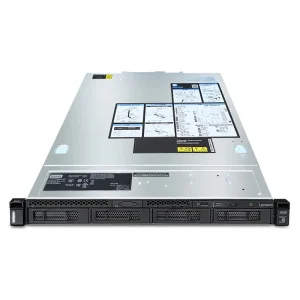
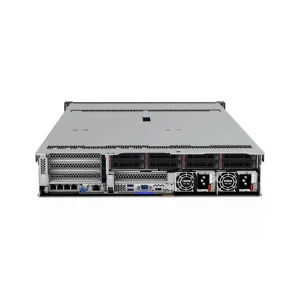
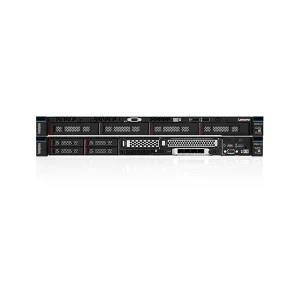
Uranium extraction operations at Husab and Rössing, alongside offshore and onshore diamond mining, require low-latency edge servers. Implementing Lenovo's 1U and 2U rack servers allows mine operators to host localized virtualization environments (e.g., VMware ESXi, Nutanix AHV) directly at the site edge. This permits real-time telemetry processing, 3D spatial mapping, and safety sensor monitoring without relying on high-latency satellite connections to centralized urban data centers.
Deploying hardware in Southern Africa requires strict attention to thermal tolerances and system architectures. Lenovo's engineering approach utilizes Neptune™ liquid cooling principles and ASHRAE A4 environmental guidelines. This ensures that the Lenovo ThinkSystem series can operate reliably at ambient temperatures up to 45°C without thermal throttling, directly reducing the operational cost of auxiliary air conditioning systems in data centers.
Utilizing the latest generation of Intel® Xeon® Scalable Processors, the ThinkSystem line supports high core counts, integrated AI accelerators (Intel® DL Boost), and PCIe Gen 5 expansion slots. Whether hosting legacy ERP software or deploying AI model inference at the edge, these systems optimize computing densities.
Procuring enterprise hardware globally requires a reliable supply chain strategy. We handle the process from pre-export configuration to international shipping, managing customs clearance through the Southern African Customs Union (SACU) framework and ensuring compliance with the NamPort authority.
Each server undergoes systematic staging, BIOS updates, firmware flashing, and RAID layout setup at our primary logistics centers before boxing. This reduces installation time upon arrival in Windhoek or regional offices. All technical manuals, power cords, and accessory kits are prepared to match local standards (Type M or Type G power inputs).
For urgent infrastructure scaling or sudden component replacements, we utilize fast-tracked air cargo directly to Windhoek’s Hosea Kutako International Airport. Bulk deliveries, data center refreshes, and mining cabinet integration shipments are routed through the Port of Walvis Bay. This provides access via established transportation networks directly to Namibia’s industrial zones.
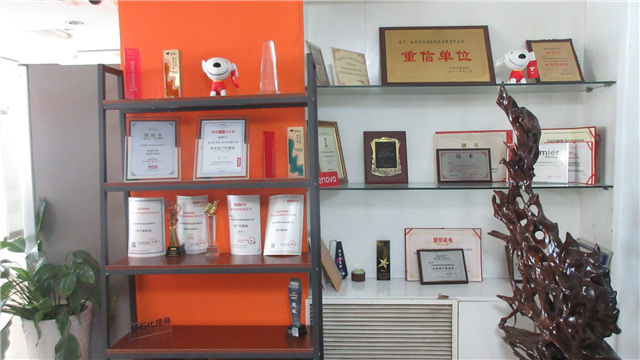
Building trust in procurement is rooted in verified capabilities and QA consistency. We combine 21 years of industry experience with precise quality control protocols, testing every single server node prior to release.
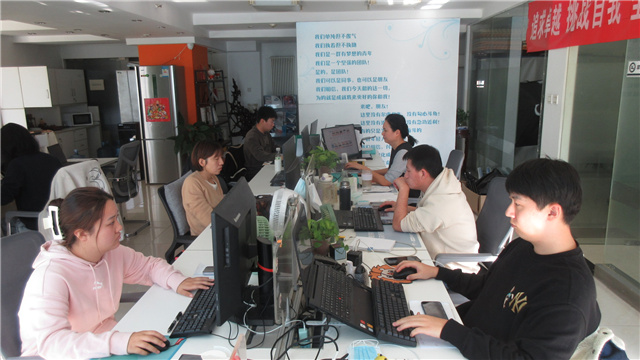
Our customization capabilities include sample builds, custom layout configurations, and tailor-made rack cabinet integration to match specific client needs. Operating from a modern technical testing facility, our technical team works to ensure all hardware components—such as CPU cycles, memory caches, and storage partitions—operate as intended.
Modern compute infrastructure operates within interconnected software-defined environments. Rather than supplying standalone hardware, we configure systems specifically for targeted enterprise architectures. This aligns our configurations with the needs of local system integrators and IT departments.
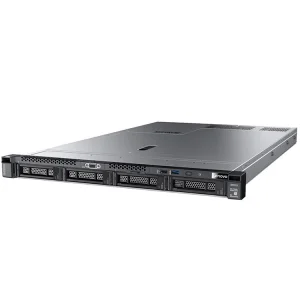
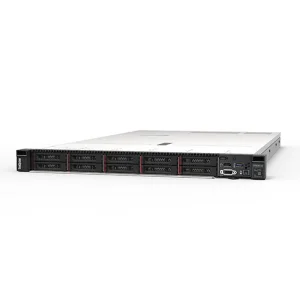
Using high-density models like the ThinkSystem SR630 V2, organizations can combine multiple physical servers into unified virtualization clusters. Equipped with dual Intel® Xeon® Gold processors and up to 1TB of ECC RAM, these systems support stable multi-tenant environments. Built-in virtualization tools simplify resource provisioning, helping to lower software licensing costs.
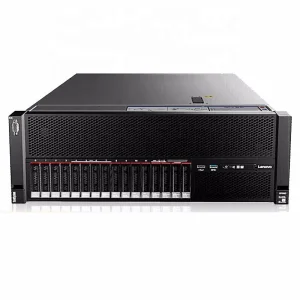
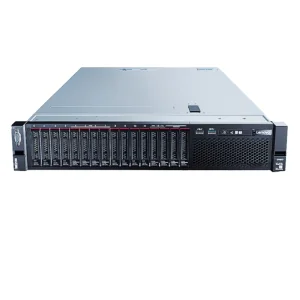
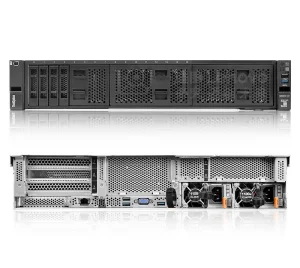
In the minerals sector, processing geological datasets requires substantial compute performance. Combining GPU acceleration with models like the ThinkSystem SR860 allows teams to process seismic data locally. This architecture reduces transfer times to external compute networks, protecting sensitive proprietary discovery data.
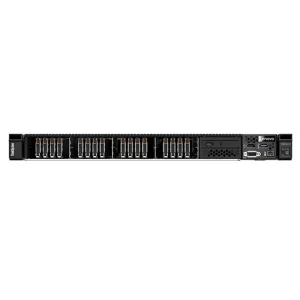
For logistic hubs along regional trade corridors, local edge nodes handle immediate processing tasks before transmitting consolidated data to central databases. System layouts utilizing the SR258 series offer high performance in compact 1U form factors, making them suitable for space-constrained office nodes.
Here are common questions regarding logistics, compliance, and custom hardware builds for deployment within the Namibian market.
Contact our hardware engineers to discuss system specifications, volume pricing, and regional logistics routes for Namibia.
Request Technical Consultation Nexus AI Server