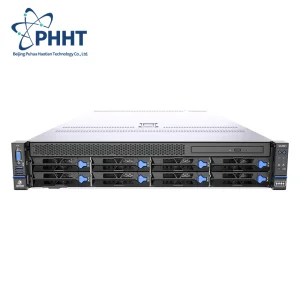
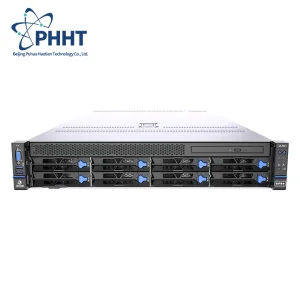
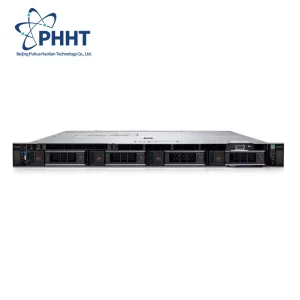
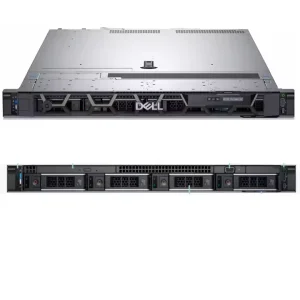
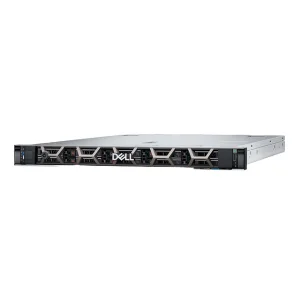
Enterprise Rack Server Supplier & Exporter in Nigeria

High-Density 1U, 2U & 4U AI & GPU Computing Infrastructure Configured for West African Data Centers

Send Inquiry Now

Nigeria's Digital Transition & High-Performance Rack Server Demand

An in-depth structural analysis of Nigeria's expanding enterprise compute requirements, telecom expansion, and localization of hybrid data services.

Nigeria represents the largest digital economy in Africa, characterized by an exponential expansion in FinTech, mobile telecommunications, and digital government services. Under the guidance of the National Information Technology Development Agency (NITDA) and local data sovereignty requirements, enterprises in Lagos, Abuja, Port Harcourt, and Kano are transitioning rapidly from public cloud-only architectures to highly resilient hybrid clouds. This paradigm shift demands high-density, on-premise rack server infrastructure designed to handle intense workloads with stable compute latency.

The Lagos data center landscape has evolved into the key digital nexus of West Africa. Major international hyperscalers and local colocation giants (such as MainOne, MDXi, Rack Centre, and Wingu.Africa) are establishing tier-III and tier-IV compliant facilities. However, the performance and localized operations of these data centers rely heavily on the availability of robust hardware components. From multi-core Intel Xeon and AMD EPYC processors to high-density SSD arrays and dedicated AI GPUs, businesses require rack-mounted systems engineered for efficiency, redundancy, and continuous uptime in tropical operational conditions.

Key Dynamic: Resolving Power & Thermal Factors in Nigeria

Industrial server deployments in West Africa must plan for two critical challenges: power grid fluctuations and thermal management. Our exported rack servers feature titanium-efficiency hot-swappable Redundant Power Supplies (1+1 PSU) and advanced cooling architectures with intelligent sensor arrays. These components adapt to ambient conditions and protect critical processors from thermal throttling during high ambient operational windows.

Localized Business & Public Sector Application Scenarios

Enterprise computing solutions in Nigeria are not a one-size-fits-all product. Different economic sectors demand custom physical server topologies to execute their operations:

  • Financial Technology (FinTech) & Banking: Under CBN compliance guidelines, payment processors, neobanks, and traditional microfinance networks must process high volumes of transaction data locally. 2U rack servers utilizing NVMe storage architectures ensure high IOPS and minimal latency for high-frequency transaction processing.
  • Telecommunications & Edge Computing: Leading network providers across Nigeria are expanding LTE and 5G nodes. 1U short-depth rack servers are deployed at edge nodes to handle traffic routing, real-time analytics, and low-latency packet processing.
  • Oil & Gas Exploration: For operators in the Niger Delta, geological mapping and seismic simulation software demand massive compute arrays. High-performance GPU-accelerated rack servers enable rapid calculation of volumetric data and reduce exploratory risks.
  • E-Governance & Public Administration: Federal and state databases require robust virtualization environments to host national identity systems, tax portals, and education databases, ensuring consistent citizen services.

Why Source From Our Chinese Factory? Export Advantages for Nigeria

Combining world-class manufacturing capacity, tailored hardware configuration, and robust logistics to build a seamless West African hardware supply pipeline.

Procuring raw enterprise compute components from China offers significant advantages for IT administrators, local system integrators, and corporate buyers in Nigeria. Operating out of our specialized electronic manufacturing ecosystem, we bridge the gap between initial configuration demands and local delivery through a highly optimized process:

21+
Years in Industry
100%
Quality Inspection
3
Graduate R&D Engineers
2003
Year Registered

Our competitive advantage is defined by four core operational principles:

  1. Tailored OEM/ODM Hardware Customization: We configure motherboards, RAM, NVMe/SATA SSDs, and processing capacities exactly to your technical guidelines. Whether your project requires high-frequency Intel Xeon chips for databases or AMD EPYC architectures for virtualization, our team builds, tests, and certifies each machine.
  2. Rigorous Testing and Traceability Protocols: Every server leaving our line undergoes continuous stress testing under full workload simulation for 24 to 72 hours. We trace each raw component (from RAM chips to power converters) to ensure maximum hardware stability, mitigating the risk of field failures.
  3. Direct Cost Efficiencies: By sourcing materials directly in China's manufacturing clusters, we remove intermediate distributor markup fees. This transparency allows us to deliver high-performance hardware configurations at highly competitive pricing, optimizing Capex budgets for Nigerian companies.
  4. Streamlined Export Logistics to West Africa: We manage export processes directly, shipping via sea or air freight to Apapa Port, Tin Can Island, or Murtala Muhammed International Airport (LOS). Our logistics team assists in navigating documentation, customs classification, and compliance checks, ensuring a smooth transit process.

Technical Configurations: Optimizing Server Infrastructure

An architectural blueprint showing how to match rack server configurations with enterprise virtualization, database, and high-performance computing needs.

Modern workloads require balanced hardware configurations to prevent processing bottlenecks. Choosing the correct rack server architecture ensures long-term performance and capacity for scaling operations:

1. High-Density Compute & Database Workloads (2U Chassis)

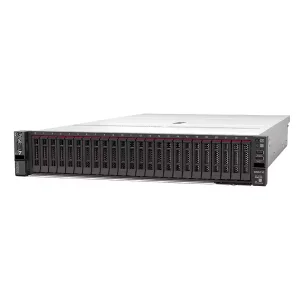
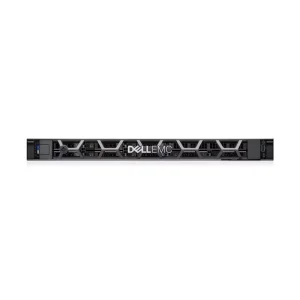
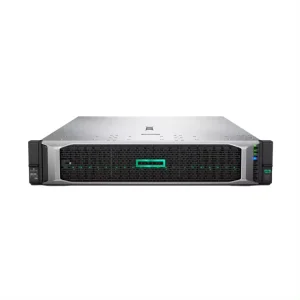
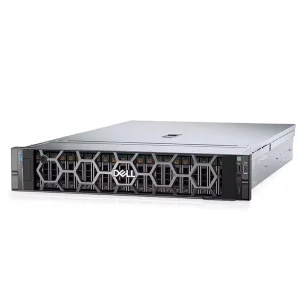
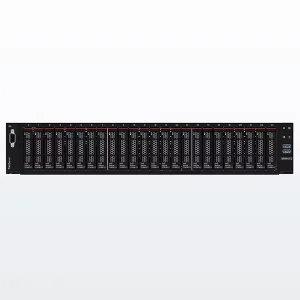
For relational databases, ERP deployments, and high-load web application clusters, the dual-socket 2U rack server represents the industry standard. Systems like the **PowerEdge R760** or the **ThinkSystem SR650 V3** provide the space required for multiple high-core processors, extensive memory capacity, and flexible PCIe expansion slots. These configurations allow teams to deploy NVMe storage drives, maximizing speed for active databases.

2. Large-Scale Virtualization & Private Cloud (1U & 2U Multi-Socket)

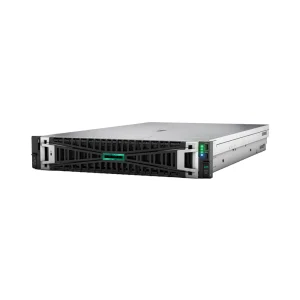
When running hypervisors (such as VMware ESXi, Proxmox VE, or Microsoft Hyper-V), maximizing core counts and memory density is essential. The **PowerEdge R6625** and systems using AMD EPYC processors support high thread counts per unit, allowing IT teams to consolidate multiple legacy servers into a single rack unit. This approach helps reduce licensing fees and lowers overall energy consumption.

3. AI Deep Learning & DeepSeek Local Deployment

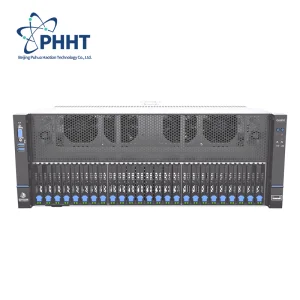
As machine learning and AI inference technologies gain adoption in Nigeria's commercial sectors, servers configured with dedicated GPU slots (like the **ThinkSystem SR660V2** or customized **4U Rack Servers**) are becoming critical infrastructure. These models support multiple NVIDIA RTX or Tensor Core GPUs, providing the parallel processing power needed to run local AI inference pipelines and large language models (LLMs).

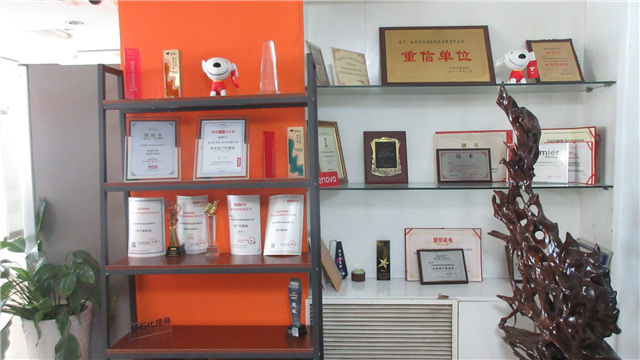
Factory Profile & Verified Quality Control

Review our manufacturing history, technical staff certifications, and strict quality control protocols.
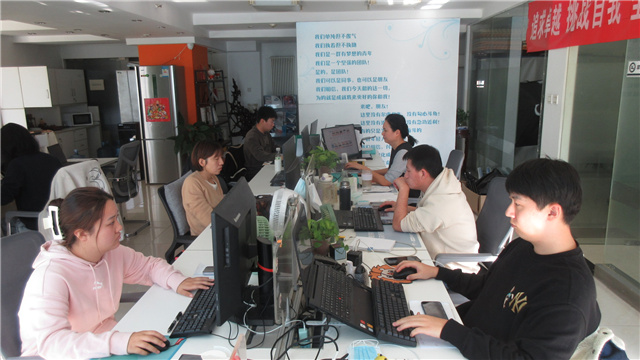
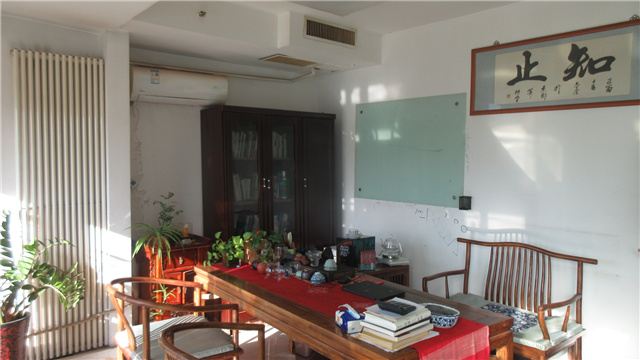
Production Facility Cleanroom Assembly Line Hardware Component Quality Assurance Lab Server Burning-In Diagnostic Testing Bay
Company Overview
Company Registration2003-07-10
Floor Space120 ㎡ (R&D & Admin Hub)
Years in Industry21 Years
Years Exporting2 Years
LanguagesEnglish
Quality Control & Inspection
Raw Material TraceabilityYes, fully documented
Inspection Method100% Comprehensive testing
QC conducted on linesYes, dynamic tracking
QA/QC Inspectors1 Lead Inspector
Research, Development & Design
R&D Staff3 Graduate Engineers
Customization OptionsOEM/ODM, Sample & Graphic tuning
Primary Export MarketsDomestic (50%), Eastern Europe (20%), North America (15%)
Main ClientsIntegrators, Retailers, Brand Wholesalers

Technical Support & Logistics FAQ

Find answers to common questions regarding logistics, technical configurations, and hardware maintenance for server installations in West Africa.

How are servers shipped to Nigeria, and what is the typical transit duration?
We offer both air and sea shipping options. Air freight to Lagos (Murtala Muhammed International Airport) typically takes 5 to 10 business days and is suitable for urgent rack configurations. Sea freight to Apapa Port or Tin Can Island Port takes approximately 35 to 45 days, representing a cost-effective solution for larger enterprise installations.
Do the rack servers support virtualization software out of the box?
Yes. We verify all custom-configured servers for hardware compatibility with major hypervisors, including VMware ESXi, Proxmox VE, and Microsoft Hyper-V. Motherboard virtualization settings (such as Intel VT-x or AMD-V) are enabled in the BIOS/UEFI before shipment.
How do you test servers to ensure stability under local conditions in Nigeria?
Each server goes through a detailed diagnostic process before packaging. We run CPU, RAM, and storage read/write benchmarks under high load to verify performance stability and test hardware behavior under typical operational temperatures.
Can we order custom OEM configurations tailored to our specific software needs?
Yes, we specialize in custom hardware configuration. You can specify processor models, RAM density, storage configuration (such as SAS, SATA, or NVMe), storage controllers, network cards, and additional cooling fans to fit your software application and operational requirements.
How do we request support if we encounter hardware issues?
Our engineering team provides technical support via email, phone, and remote diagnostics. In the event of a component failure, we ship replacement parts (such as replacement RAM, hard drives, or power supply units) directly to your location in Nigeria to minimize downtime.